
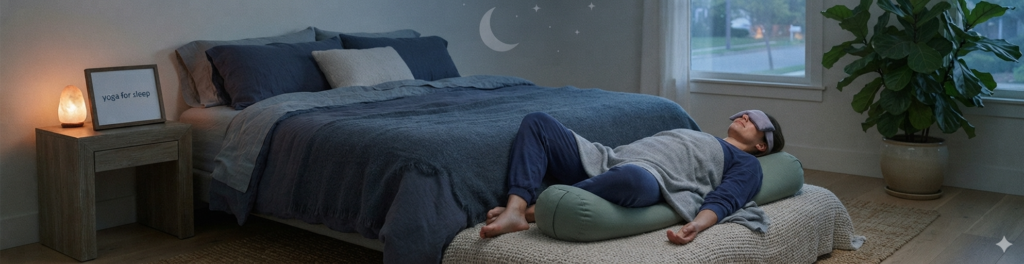
Struggling to switch off at night? Discover how yoga for sleep can transform your evenings with a simple, relaxing yoga before sleep routine anyone can follow.
Yoga for Sleep: A Calming Bedtime Yoga Routine That Works
If you’ve ever stared at the ceiling at 1 a.m. replaying your day on a loop, you already know how precious good sleep is. Yoga for sleep is one of the simplest, most accessible tools you can use to quiet a racing mind and prepare your body for deep, restorative rest. Unlike sleeping pills or late-night scrolling, a short bedtime yoga routine works with your nervous system instead of against it — and you don’t need to be flexible, experienced, or even fully awake to benefit.
In this guide, we’ll walk through why yoga helps you sleep, a full step-by-step routine you can do tonight, and practical tips for making relaxing yoga before sleep a permanent part of your wind-down ritual.
Why Yoga for Sleep Actually Works
Sleep trouble is rarely about the mattress. More often, it’s an overactive nervous system — cortisol still buzzing from a stressful day, muscles tense from hours at a desk, thoughts racing about tomorrow’s to-do list. Yoga addresses all three.
According to the Sleep Foundation, gentle yoga combines physical movement, breathwork, and mindfulness in a way that lowers physiological arousal, making it easier to transition into sleep. It’s not about building strength or breaking a sweat — it’s about signaling to your body that the day is officially over.
“The body benefits from movement, and the mind benefits from stillness.” — B.K.S. Iyengar
That balance of gentle movement and stillness is exactly what makes a bedtime yoga routine so effective for sleep.
The Science Behind Bedtime Yoga
When you practice slow, restorative yoga, you activate the parasympathetic nervous system — your body’s “rest and digest” mode. This shift:
- Lowers heart rate and blood pressure
- Reduces circulating cortisol (the stress hormone)
- Relaxes tight muscles that keep you physically alert
- Slows breathing, which in turn calms the mind
Research published via the National Institutes of Health (NIH) has linked regular yoga practice to improved sleep quality, reduced insomnia symptoms, and better overall sleep duration — particularly in people dealing with stress-related sleep disruption. Even a 10–15 minute practice before bed can make a measurable difference.
A Simple Bedtime Yoga Routine (Step-by-Step)
You don’t need a studio, props, or an hour of free time. Roll out a mat (or just use your bed) and move through this bedtime yoga routine at a slow, unhurried pace. Hold each pose for 5–8 deep breaths.
| Step | Pose | Duration | Purpose |
|---|---|---|---|
| 1 | Seated Forward Fold | 1–2 min | Releases lower back tension |
| 2 | Cat-Cow Stretch | 1 min | Warms and relaxes the spine |
| 3 | Child’s Pose | 2 min | Calms the nervous system |
| 4 | Reclined Butterfly | 2 min | Opens hips, deepens breathing |
| 5 | Legs-Up-the-Wall | 3–5 min | Improves circulation, reduces anxiety |
| 6 | Supine Twist | 1 min each side | Releases tension in the spine |
| 7 | Savasana (Corpse Pose) | 3–5 min | Full-body relaxation before sleep |
Move through the sequence slowly, breathing in through the nose and out through the mouth. By the time you reach Savasana, your body should feel noticeably heavier and calmer.
Best Relaxing Yoga Poses Before Sleep
If you’re short on time, these are the highest-impact relaxing yoga before sleep poses to prioritize:
- Child’s Pose (Balasana): A gentle forward fold that quiets the mind and stretches the back.
- Legs-Up-the-Wall (Viparita Karani): Considered one of the most effective poses for relaxation; it reduces swelling in the legs and calms the nervous system.
- Reclined Bound Angle Pose: Opens the hips and chest while requiring almost no effort.
- Savasana: The final relaxation pose — often the most important part of any sleep-focused practice.
Tips to Get the Most Out of Your Practice
- Keep the lights low. Bright light suppresses melatonin production, so practice by lamp light or candlelight if possible.
- Pair movement with breath. Try a 4-7-8 breathing pattern (inhale 4 counts, hold 7, exhale 8) during Savasana.
- Be consistent. Practicing your bedtime yoga routine at the same time each night reinforces your body’s sleep cues.
- Skip your phone afterward. All that calming work can be undone in seconds by blue light and notifications.
- Add calming scents. Lavender essential oil has been shown to support relaxation and may enhance your practice.
For more on building a full evening wind-down ritual, check out our related guide on creating a nighttime self-care routine and how to choose the right yoga mat for home practice.
Common Mistakes to Avoid
| Mistake | Why It Hurts Sleep | Better Approach |
|---|---|---|
| Doing vigorous or heated yoga at night | Raises heart rate and body temperature | Stick to slow, restorative flows |
| Rushing through poses | Prevents nervous system from downshifting | Move slowly, breathe deeply |
| Practicing with bright overhead lights | Suppresses melatonin | Use dim lighting or candles |
| Checking your phone right after | Re-stimulates the brain | Keep devices out of reach |
FAQs About Yoga for Sleep
How long should a bedtime yoga routine be? Even 10–15 minutes can be effective. Consistency matters more than duration.
Can beginners do yoga for sleep? Absolutely. This routine requires no prior experience and no advanced flexibility.
What time should I practice relaxing yoga before sleep? Aim for 30–60 minutes before your intended bedtime, once the day’s obligations are wrapped up.
Is yoga better than melatonin or sleep medication? Yoga isn’t a replacement for medical treatment, but it’s a low-risk, sustainable habit that supports natural sleep processes. If you have chronic insomnia, consult a healthcare provider.
Final Thoughts
Good sleep doesn’t require a dramatic overhaul — sometimes it just takes ten quiet minutes on a mat. A consistent yoga for sleep practice teaches your body to recognize the difference between “daytime alert” and “nighttime rest,” making it easier to fall asleep and stay asleep. Start with two or three poses tonight, build from there, and give your mind permission to finally power down.
Sweet dreams — and don’t forget to breathe.
Image suggestion: A softly lit bedroom scene of a person in Child’s Pose on a yoga mat beside their bed. Alt text: “woman practicing yoga for sleep in a dimly lit bedroom before bedtime.”