
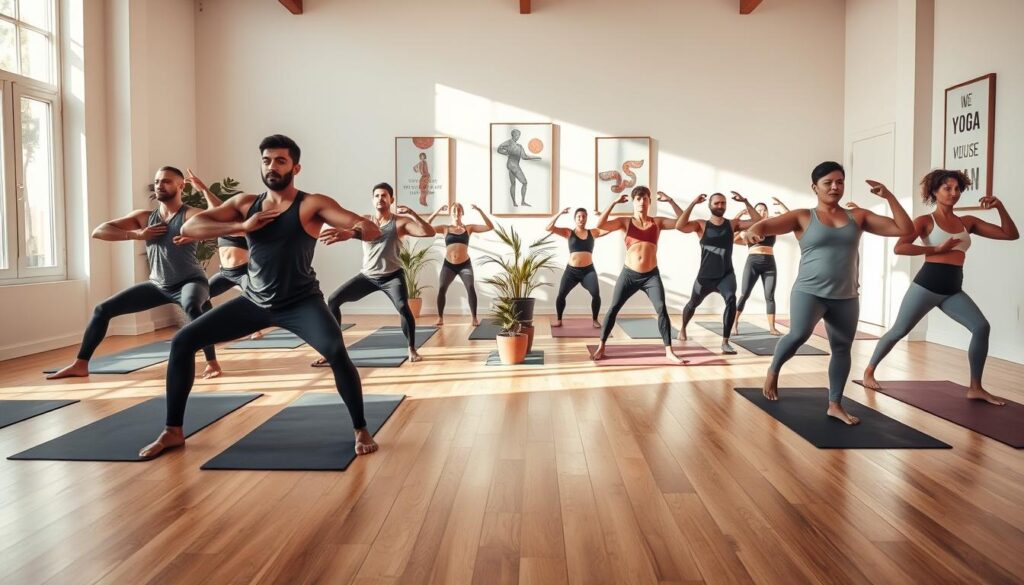
Yoga for muscle building can be a welcoming way for beginners to improve strength, stability, and endurance without needing a gym membership or heavy weights. Many people share the same feelings when they think about enhancing their strength and endurance. This guide is here to show you that there’s a welcoming path to achieving your goals, one that doesn’t require a gym membership or heavy weights.
Imagine a practice that helps you connect with your body while building strength. The right techniques can strengthen those smaller muscles often overlooked in traditional workouts. This journey is not just about gaining muscle mass; it’s about improving your overall well-being.
In this article, you will discover how bodyweight resistance can effectively challenge your muscles. You’ll learn about beginner-friendly poses that build progress gradually, enhancing your stability and flexibility. By the end, you’ll understand how this practice can offer unique benefits, helping you set realistic expectations for your fitness journey.

yoga for muscle building
Key Takeaways
- Bodyweight resistance can effectively challenge your muscles.
- Smaller muscles are strengthened, enhancing overall stability.
- Beginner-friendly poses help build strength gradually.
- Realistic expectations are set for lean muscle gain.
- This practice improves flexibility and balance.
Getting Started with Yoga for Muscle Building
What if you could improve your strength and stability through a mindful practice? This journey begins with understanding how this approach can enhance your overall fitness. By focusing on smaller stabilizing muscles, you can develop strength in your core, arms, legs, and back.
Bodyweight training, as practiced here, uses your own body as resistance. This method creates a unique challenge through sustained holds and controlled movements. Unlike traditional weightlifting, it emphasizes alignment and balance.
Here are some key benefits of this practice:
- Improves core strength through various poses.
- Enhances balance to prevent injuries.
- Builds endurance by encouraging steady breathing.
- Supports mobility in everyday movements.
- Encourages a mindful approach to physical challenges.
As you start, focus on your breathing and hand placement. Maintain a neutral lower back to avoid strain. Remember, consistent practice will lead to improved body strength and flexibility over time.
Essential Yoga Poses to Build Strength
Picture yourself mastering essential poses that transform your body and boost your strength. Incorporating dynamic and stabilizing poses into your routine can significantly enhance your physical abilities. Here are some key poses to consider:
Dynamic Poses: Plank, Chair Pose, and Tree Pose
Start with the Forearm Plank, which you can hold for one minute or longer. Ensure your body remains parallel to the floor, drawing your navel inward and pressing through your heels. Next, try the Chair Pose on Tiptoes, keeping your heels down for added stability.
The Tree Pose is excellent for training your standing leg and core. Hold it for 5 to 10 breaths while maintaining level hips and a focused gaze.
Stabilizing Poses for Core and Back Strength
Incorporate the Forearm Side Plank to develop shoulder and core stability. Hold for 5 to 10 deep breaths on each side. The Dolphin Pose is another great option, held for 5 breaths, focusing on your spine and shoulders.
Finally, the Goddess Pose targets your thighs and glutes. With a stance of 3 to 4 feet wide, hold this pose for one minute or longer. The High Lunge can be repeated 5 to 10 times on each side, enhancing your leg and upper body strength.
Yoga for Muscle Building: Exploring Proven Techniques
Imagine a way to enhance your strength while connecting with your body. Integrating modern strength training with traditional practices can lead to impressive results. Styles like Ashtanga and Power Yoga focus on dynamic sequences that challenge your physical abilities.
In contrast, Iyengar and Forrest Yoga emphasize longer holds, building endurance and stamina. Both approaches offer unique ways to develop strength. Incorporating inversions and balances, as seen in Rocket Yoga and Jivamukti, can also elevate your training by demanding more from your arms, shoulders, and core.
Utilizing progressive overload is essential in your practice. This means holding poses longer, increasing repetitions, and trying harder variations. You can also reduce rest times and improve alignment without solely relying on heavier weights.
A study involving 79 participants highlighted these benefits. After completing 24 Sun Salutation cycles six days a week for 24 weeks, participants showed significant improvements in upper-body strength and reduced body fat.
Enhancing Your Practice: Tips to Boost Upper and Lower Body Strength
Imagine integrating focused practices that not only build strength but also promote overall well-being. You can achieve this by targeting specific areas of your body through various poses.
Targeting Arms, Shoulders, and Upper Body with Poses
Start with the Plank Pose, which activates your core, shoulders, and back. Aim to hold it for at least one minute. Follow this with Chaturanga Dandasana to strengthen your arms and chest.
Next, practice Cobra Pose for 3 to 5 repetitions, focusing on engaging your spine. Incorporate Warrior II for 8 to 10 breaths to develop endurance in your legs and hips.
Strengthening Legs, Glutes, and Core with Focused Movements
For your lower body, Chair Pose targets your thighs and glutes. Hold it for 5 to 10 breaths to build strength. Additionally, try the Tree Pose and King Dancer to enhance balance and stability.
Incorporate core-strengthening options like Boat and Locust Poses to improve your overall body strength.
Improving Endurance and Flexibility Through Practice
Longer holds in these poses will enhance your endurance and flexibility. Always pay attention to your alignment to protect your knees, hips, and lower back.
As you progress, consider changing leverage or choosing more challenging poses on your mat. Remember, “Strength does not come from physical capacity. It comes from an indomitable will.”
Practical Advice for a Consistent Yoga Routine
Establishing a regular practice can be your key to success. By committing to your mat, you can create a routine that builds strength over time. Remember, “Success is the sum of small efforts, repeated day in and day out.”
Consistency is essential. Improvements in strength generally require several weeks of regular practice. You can start with shorter sessions and gradually increase the duration as you become more comfortable.
Establishing a Regular Practice on Your Mat
To make progress, focus on manageable goals. Aim for at least three sessions a week. Each session should include a mix of poses that target different muscle groups. This will help prevent fatigue and promote recovery.
Mixing Yoga with Weight Training to Maximize Results
Consider integrating your practice with traditional weight training. Combining these approaches allows you to build muscle effectively. For example, perform strength training on alternate days while reserving your mat time for mobility and core control.
Incorporating a variety of styles can also enhance your experience. Vinyasa, Power Yoga, and Hot Yoga offer athletic strength, while Yin and Ananda Yoga provide a calmer, restorative option. This balance can help you maintain motivation and improve overall fitness.
Conclusion
As you wrap up your fitness journey, consider the transformative power of a mindful practice. This approach can effectively build practical body strength through bodyweight resistance and controlled poses. Remember, key movements like Plank, Chaturanga, Boat, and Warrior II engage various muscles throughout your body.
It’s important to note that visible strength and muscle changes require several weeks of consistent practice. For those seeking greater muscle mass, combining this practice with traditional weight training can yield excellent results.
Ultimately, this journey fosters not just strength but also endurance, flexibility, and confidence. If you’re interested in deepening your knowledge, consider the ISSA Yoga Instructor certification for safe and effective practice development.
FAQ
What are the best poses for building strength?
Some of the best poses include Plank, Chair Pose, and Tree Pose. These help engage multiple muscle groups, enhancing overall strength.
How often should I practice to see results?
Aim for at least three to four sessions per week. Consistency is key to building strength and endurance over time.
Can I combine yoga with weight training?
Absolutely! Mixing yoga with weight training can maximize your results by improving flexibility and balance while building muscle.
What should I focus on for upper body strength?
Focus on poses that target the arms, shoulders, and back, such as Downward Dog and Chaturanga, to enhance upper body strength.
How can I strengthen my legs and glutes?
Incorporate poses like Warrior II and Bridge Pose to effectively target the legs and glutes, promoting strength and stability.
Is it normal to feel sore after practicing?
Yes, some soreness is normal, especially when you are new to the practice. It indicates that your muscles are adapting and growing stronger.
What are the benefits of yoga for overall fitness?
Yoga improves flexibility, balance, and core strength, while also promoting relaxation and mental clarity, contributing to overall fitness.