
Becoming a mother is a beautiful journey, yet it can also be overwhelming. The early days with your new baby are filled with joy, but they can also bring physical and emotional challenges. Reconnecting with your body after the incredible experience of birth is essential for your well-being.
Postnatal practices offer a gentle way to support your recovery. Every woman’s experience is unique, and your path to healing will depend on various factors, including your delivery and current energy levels. You deserve to honor your body’s changes without the pressure to rush back to pre-baby fitness.
Many new moms, like Anna Greenberg, have found solace in these practices, feeling supported and less alone after a difficult delivery. This article will guide you through breathing techniques, beginner-friendly poses, and home-flow ideas to help you heal and relax.

postpartum yoga
Key Takeaways
- Postnatal practices can help you reconnect with your body.
- Recovery varies; listen to your body and seek medical guidance.
- Breathing techniques can aid in relaxation and healing.
- Beginner-friendly poses can be adapted for safety and comfort.
- Focus on self-care without the pressure of quick fitness recovery.
Introduction: Embracing Your Recovery Journey
Welcoming a new baby into your life can be both exhilarating and daunting. As you navigate this transition, it’s important to understand how pregnancy and giving birth affect your body. These changes can impact your abdominal muscles, pelvic support, posture, energy levels, and emotional health. Patience is essential during your recovery.
Dr. Zoe Kiefer suggests that gentle practices may begin around the fifth or sixth week after an uncomplicated vaginal delivery, with your healthcare team’s approval. For those who have had a cesarean delivery, gentle work typically starts around eight weeks.
Incorporating breath awareness is a wonderful way to settle your nervous system. Begin by finding a comfortable seated position, taking slow nasal inhalations, and relaxed exhalations. This practice can help you prepare for movement.
It’s normal to experience emotional fluctuations after having a baby. While gentle practices can be supportive, they are not a substitute for professional mental health care.
Getting Started with Postpartum Yoga
Embracing your new role as a mother can be a thrilling yet challenging experience. As you begin your journey with postpartum yoga, it’s crucial to consult your healthcare provider. They can guide you on when it’s safe to start exercising, especially after a cesarean delivery or if you’ve faced complications.
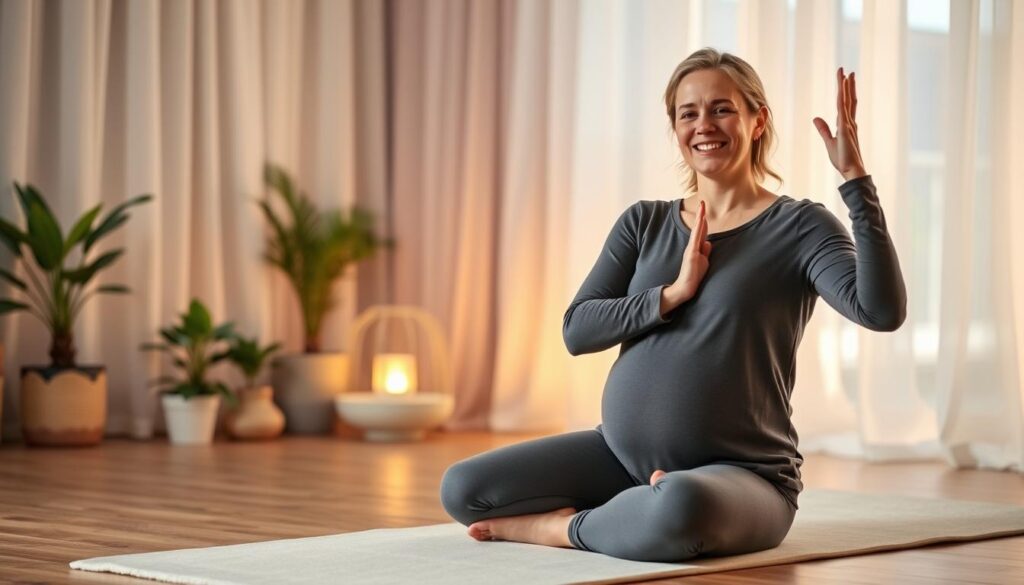
Once you receive the green light, you can start with gentle movements. Begin on a comfortable mat or seated position, taking several steady breaths. This centering method is part of the gentle MamasteFit sequence, designed to help you reconnect with your body.
As you practice, pay attention to your body’s signals. Observe rib expansion, abdominal pressure, and any discomfort. This awareness will help you progress safely into a longer yoga practice. Remember, Casey Backus and MamasteFit offer structured support that combines yoga instruction with physical therapy knowledge.
Gentle Postpartum Yoga Poses to Try
As you embark on your journey of motherhood, finding balance can feel like a new challenge. Incorporating gentle movements into your routine can be a wonderful way to reconnect with your body. Here are some effective poses to try:
Low Lunge for Strengthening
This pose helps strengthen your psoas muscles. Ensure your front knee is above your ankle, with the back knee supported on the mat and your hips facing forward.
Half Plank for Core Engagement
Begin with a 20-30 second hold in a flat back position. Keep your elbows soft and breathe steadily to engage your core effectively.
Downward-Facing Dog for Flexibility
Start with a 20-30 second hold. Place your hands beneath your shoulders, lift your hips upward, and maintain a long spine to avoid straining your back.
Pigeon Pose for Hip Release
This pose is excellent for releasing tension in the hips and glutes. Hold for 20-30 seconds on each side, using a pillow for comfort if needed.
Complement these poses with Cat-Cow for gentle spinal movement, a supported bridge for pelvic floor strength, and Child’s Pose for relaxation.
Physical and Emotional Benefits of Postpartum Yoga
The transition to motherhood can reveal both the joys and the struggles of your physical and emotional well-being. Engaging in gentle practices can help you rebuild strength and stability after birth.
Gradual movements can effectively restore your abdominal and pelvic floor strength, which may have weakened during pregnancy. This approach avoids the strain of maximal exertion, focusing instead on stability.
Additionally, gentle mobility can alleviate common discomforts, such as back pain and stiffness. As you flow through your practice, you may notice a reduction in body tension.
- Anna Greenberg shared that yoga helped her develop strength, stability, and a stronger connection with herself.
- Research indicates that yoga can reduce depression and enhance quality of life during vulnerable periods.
- Potential benefits include improved sexual function, reduced urinary incontinence, and less risk of long-term prolapse.
Remember, it’s essential to consult your healthcare provider to ensure a safe practice as you navigate your recovery journey.
Safety Tips and Guidelines for Your Postnatal Practice
As you begin your journey with gentle movements, it’s crucial to prioritize safety. Your body has undergone significant changes, and listening to it is essential. If a movement feels too intense, apply Dr. Kiefer’s practical rule: reduce the intensity, shorten the hold, or stop altogether.
Pregnancy-related relaxin can make you more flexible, which might seem beneficial. However, it can also increase the risk of injury. Avoid pushing yourself into familiar ranges from before pregnancy, as this can strain healing tissues.
It’s wise to steer clear of deep lunges, intense Pigeon Pose, and wide-stance hip movements until your healthcare provider confirms you’re ready. Always be aware of your body’s signals. If you experience pain, unusual bleeding, or dizziness, stop and reach out to a healthcare professional.
Building Your Personalized Postpartum Yoga Flow
Creating a unique sequence can help you reconnect with your body while managing the demands of motherhood. Begin by establishing a home-based routine that feels comfortable and manageable.
Creating a Home-Based Routine
Start with breath awareness and gentle movements like hands-and-knees mobility. Incorporate Child’s Pose and Cat-Cow to enhance flexibility and strength. A brief closing pause can help you reflect on your practice.
Modifying Poses as You Heal
As you recover, it’s essential to modify your practice. Widen your knees for comfort, support your head with a block, and shorten the duration of holds. This approach allows you to adapt as your body heals.
Coordinate your practice around feeding and baby-care demands. Missing a session isn’t a failure; it’s part of the journey. For structured support, consider classes by Casey Backus or MamasteFit’s programs tailored for new moms.
Conclusion
The journey of motherhood brings a mix of joy and challenges that can be hard to navigate. Remember that gentle practices can support your recovery, relaxation, and emotional well-being after birth. Before advancing, seek medical clearance, especially since timelines differ after vaginal delivery and cesarean birth.
Keep your movements gentle and use props when needed. Adjust poses according to your pain levels, healing status, and daily responsibilities with your baby. Focus on breath awareness and gradual movement to reconnect with your core while respecting your body’s healing process.
Treat your yoga sequence as a flexible part of your fitness journey. Progress at a pace that feels right for you, allowing space for both healing and motherhood.
FAQ
When can I start practicing yoga after giving birth?
It’s generally recommended to wait at least six weeks after giving birth before starting your practice. However, always consult your healthcare provider for personalized advice.
What are some safe poses for new moms?
Gentle poses like the Cat-Cow stretch, Child’s Pose, and Low Lunge are great for easing tension and strengthening your body post-birth.
How can yoga help with postpartum recovery?
Engaging in a regular practice can enhance your core strength, improve flexibility, and promote emotional well-being, making your recovery smoother.
Do I need any special equipment for my practice at home?
A yoga mat is essential for comfort, and you might find props like blocks or straps helpful for support as you practice.
Can I do yoga if I have a C-section?
Yes, but it’s crucial to wait until your doctor gives you the green light. Start with gentle movements and listen to your body as you progress.
How often should I practice yoga postpartum?
Aim for a few times a week, even if it’s just for 10-15 minutes. Consistency is key to reconnecting with your body and enhancing your well-being.
What should I focus on during my yoga practice?
Concentrate on breath awareness, gentle movements, and poses that strengthen your core and pelvic floor. This will help you feel more connected to your body.
Is it normal to feel discomfort during yoga after giving birth?
Some discomfort can be expected, especially if your body is still healing. However, if you experience pain, it’s important to stop and consult your healthcare provider.