Yoga props can make your first yoga class feel more comfortable and less overwhelming. The sight of unfamiliar equipment might make you question if you belong there. It’s normal to feel nervous, wondering what all those tools are for and if they mean you’re not advanced enough. But here’s the truth: these tools are designed to enhance your experience, not hinder it.
Using these items can bring you comfort, stability, and confidence. They help you find the right alignment and support your body as you learn. For instance, layering two thin mats can provide a solid base while cushioning your knees and wrists. It’s all about creating a space where you feel secure.
Beginner-friendly options, like Kmart blocks, can make reaching the floor easier and help you feel more at ease while mastering foundational poses. This article will help you select the right equipment for any situation, whether you’re at a studio, practicing at home, or adapting to new physical needs.
Remember, these tools are here to assist your body in meeting each pose with grace, not to encourage unnecessary strain. You deserve to practice in a way that feels good.

yoga props guide
Key Takeaways
- Feeling anxious in your first class is common; props can help ease that tension.
- These tools enhance comfort and stability, making poses more accessible.
- Layering mats can provide extra cushioning and support.
- Beginner-friendly blocks can assist in reaching the floor and improving confidence.
- Choosing the right equipment is essential for various practice settings.
Getting Started with Your Yoga Props Guide
Entering a class filled with new tools can spark uncertainty. Understanding how these items enhance your practice is essential. They are not just accessories; they are intentional extensions that help you explore poses safely.
In Hatha and Iyengar classes, the focus is on alignment and precision. Here, blocks and straps become valuable learning tools. They assist in achieving the right form, making your experience more fulfilling.
Restorative practices rely heavily on supportive items like bolsters, blankets, and eye pillows. These props help calm the nervous system and promote relaxation. A flax-and-lavender eye pillow, for instance, can deepen your sense of peace.
For beginners, it’s wise to start with one or two versatile pieces. This approach allows you to understand your needs without overwhelming yourself. Remember, supportive equipment encourages curiosity and helps build confidence as you learn balance and breathing.
Shelley’s principle is clear: begin where you are and choose tools that support your current practice.
Benefits of Using Yoga Props
Finding the right tools can elevate your comfort and alignment during your sessions. These supportive items are essential for enhancing your practice, especially when it comes to both restorative and active poses.
Blocks are particularly helpful as they bring the floor closer to you. This reduces overreaching and helps maintain healthier alignment in standing, seated, and balancing poses. They make challenging poses more accessible.
When practicing restorative yoga, bolsters and knee pillows provide crucial support. They ease pressure around sensitive joints and help you relax into reclined positions. A strap can create space around tight hamstrings or shoulders, allowing you to stretch without forcing your body.
Comfort is vital, especially during injury recovery. The right props can support your body, ensuring consistency in your practice. Remember, as the source reminds us, “There’s no bonus prize for struggling through discomfort.”
Choosing the Right Yoga Props for Your Practice
Choosing the right tools for your practice can be a game-changer. Understanding what to look for will help you make informed decisions. Consider factors like material, firmness, and portability before buying. These elements can significantly impact your comfort and alignment.
For beginners, a budget-friendly starter kit is an excellent option. For about $77 CAD, you can get two foam blocks, a strap, and an eye pillow. This setup is perfect for easing into your sessions.
If you’re ready to invest a bit more, a mid-range kit for approximately $212 CAD includes a long-and-lean bolster, two foam blocks, and a strap. This combination is ideal for both home and restorative practices.
For those looking for a complete setup, an investment kit at around $347 CAD features two bolsters, two foam blocks, a strap, a blanket, and an eye pillow. This comprehensive collection will support your journey.
Before committing to specialized equipment, consider temporary alternatives like rolled firm blankets or couch cushions. The right tools can make poses safer and more accessible by reducing reach demands and improving floor contact.
Exploring Popular Props: Blocks, Straps, Bolsters, and More
Stepping into a world of supportive tools can open up new dimensions in your practice. Understanding the various items available can help you enhance your experience significantly.
Yoga Blocks and Their Versatility
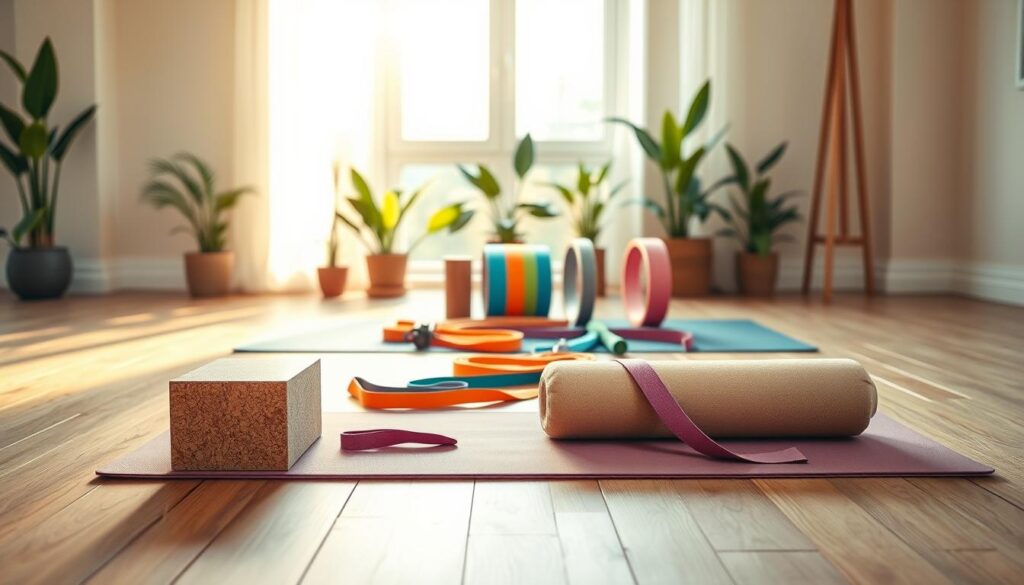
Blocks are essential for bridging the gap between your body and the floor. You can choose between cork blocks, which are dense and naturally grippy, and recycled foam blocks that are easy to clean. Both options help you maintain alignment in various poses.
The Role of Straps in Deepening Your Practice
Yoga straps come in different lengths, such as six, eight, and ten feet. The six-foot strap is perfect for basic reach extension, while longer straps allow for more versatility in loops and restorative arrangements. The AligN strap features a unique interlock buckle, while the unfoLD strap is made from 100% recycled polyester.
Why Bolsters and Blankets Are Essential for Comfort
Bolsters provide vital support for the spine during poses like heart openers and forward folds. Available in various shapes, such as rectangular and round, they cater to different needs. Blankets, made from 75% recycled wool, can cushion knees, lift hips, or add warmth during Savasana.
Conclusion
Navigating a new practice can be both exciting and challenging. Remember, supportive tools are extensions of your journey, not crutches. They help you move with greater awareness and control.
A single block, strap, blanket, or bolster can meaningfully change how a pose feels. Choose equipment based on your goals, physical needs, class style, and budget.
Comfort, stability, and alignment create a solid foundation for both active and restorative practices. Ultimately, it’s not about doing more, but about feeling supported, grounded, and present.
FAQ
What are the main benefits of using props during my practice?
Using tools can enhance your comfort, improve alignment, and make various poses more accessible, allowing you to focus on your breath and mindfulness.
How do I choose the right props for my body type?
Consider your individual needs, flexibility, and the types of poses you want to practice. It’s essential to select items that support your body comfortably.
Can props help me with my alignment?
Absolutely! They provide support and guidance, helping you maintain proper alignment, which can prevent injuries and enhance your overall experience.
Are there budget-friendly options for yoga tools?
Yes! Many affordable options are available, such as foam blocks, straps, and blankets, which can be found at local stores or online.
How can I incorporate props into my home practice?
Start by using a mat and gradually add items like blocks or straps to assist with poses. Experiment with different tools to find what feels best for you.
What types of props are best for restorative practices?
Bolsters, blankets, and eye pillows are excellent for restorative sessions, providing comfort and support while you relax and rejuvenate.