
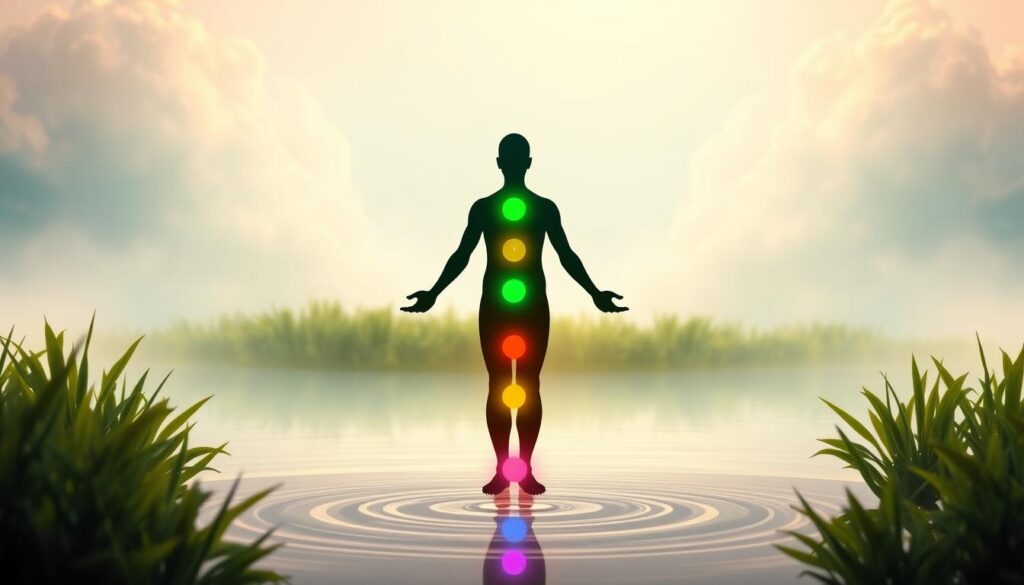
Have you ever felt a sense of imbalance in your life? Maybe it was a time when stress seemed overwhelming or when emotions felt too heavy to bear. Understanding your energy can be a transformative journey, helping you regain that sense of peace and harmony.
At the heart of this exploration are the seven principal energy centers that run from the base of your spine to above your head. These centers, often referred to as energy hubs, have been acknowledged in ancient texts dating back to 1500-1000 BC. They serve as a map guiding you through your personal experiences and emotional landscapes.
This article aims to provide friendly, practical guidance on how to engage with these energy centers. You won’t find promises of instant transformation here. Instead, you’ll discover ways to connect with your body, emotions, and traditional practices like yoga and meditation. Together, we’ll gradually build your understanding from the basics to more advanced self-reflective techniques.

Edit
Full screen
Delete
chakras for beginners
Introduction to Chakras and Energy Balancing
Have you noticed moments when your energy feels scattered or unbalanced? Understanding these energy centers can be a vital step in restoring harmony in your life. These centers are traditional locations where practitioners believe prana, or life force, flows through the subtle body.
When one of these centers is blocked, it may manifest in various ways. You might experience physical complaints like bowel issues or emotional patterns such as insecurity. Andrea Ferretti highlights that yoga poses and breathwork can help move blocked prana through these energy vortexes, allowing you to feel more aligned.
- Yoga classes can leave you feeling clearer and lighter.
- Mindful attention during practice promotes emotional well-being.
- Observe your experiences without jumping to conclusions about energetic blockages.
As you engage with these practices, remember that the journey is personal. Each step can lead to a deeper understanding of your own energy and how to balance it effectively.
History and Origins of Chakras
Do you ever wonder where the concept of energy centers originated? The roots of these fascinating systems trace back to ancient India, specifically within the Vedas, which date to around 1500-1000 BC. The Sanskrit term “cakra” translates to “wheel,” symbolizing the dynamic nature of these energy points.
Over time, the understanding of the seven main energy centers has evolved. While ancient texts laid the groundwork, modern interpretations have expanded their significance. Today, you might find these centers represented in yoga studios and wellness literature, often associated with specific colors, locations along the spine, and life themes.
- Each center is linked to a unique purpose and element.
- Teachers today connect these energy points with sounds and colors.
- Modern interpretations can vary widely, encouraging respectful study.
As you explore this ancient system, remember that each interpretation adds depth to your understanding. Embrace the journey of discovery as you learn about these vibrant energy centers.
What Are Chakras and How Do They Work?
Do you find yourself pondering the unseen connections between your feelings and your physical state? The concept of chakras describes these connections as spinning disks of energy, or cakras, which means “wheel” in Sanskrit. These energy centers are not something you can measure like your heart rate; they exist within the subtle body.
Traditionally, there are seven main centers that run from the base of your spine to just above your head. Each center corresponds to specific organs, emotional patterns, and even spiritual awareness. Andrea Ferretti points out that when energy flow is blocked, you might experience anxiety, lethargy, or poor digestion.
Practitioners often use this system to enhance their understanding of various aspects of life, including:
- Grounding and stability
- Creativity and personal power
- Connection and communication
- Intuition and purpose
Remember, these seven centers work together. Focusing on one area can influence your understanding of the entire system, enriching your journey towards balance.
The Seven Main Chakras Explained
Have you ever considered how your energy centers influence your overall well-being? Understanding these energy hubs can enhance your journey toward balance and harmony. Each center has its unique qualities and areas of focus.
Overview of the Energy Centers
The seven main energy centers, or chakras, play a crucial role in your physical and emotional health. They are:
- Muladhara (Root Chakra): This earth-associated center is linked to security and survival. It is represented by the color red and the sound LAM.
- Svadhisthana (Sacral Chakra): Associated with water, this center embodies creativity and fluidity. Its color is orange, and the seed sound is VAM.
- Manipura (Solar Plexus Chakra): Located at the navel, this fire-related center is all about confidence and personal power. It resonates with the color yellow and the sound RAM.
- Anahata (Heart Chakra): The air element defines this center, promoting compassion and connection. It is represented by green and the sound YAM.
- Vishuddha (Throat Chakra): This ether-associated center focuses on communication and self-expression. It is symbolized by the color blue and the sound HAM.
- Ajna (Third Eye Chakra): Linked to intuition and inner wisdom, this center is represented by indigo and the sound OM.
- Sahasrara (Crown Chakra): Associated with cosmic energy and spirituality, this center is represented by violet or white.
By understanding these centers, you can begin to address any issues you may encounter in your body and emotions. Regular practices such as yoga and meditation can help you align these energy points.
chakras for beginners: A Step-by-Step Guide to Energy Balancing
Have you ever sensed that your energy is not flowing as it should? Identifying imbalances in your energy centers is the first step toward achieving harmony. You can start by tuning into your feelings. Ask yourself if you feel insecure, stagnant, or disconnected.
Once you recognize these feelings, you can choose a practice that resonates with you. For instance, Jasmine Tarkeshi, cofounder of Laughing Lotus Yoga Center, suggests using longer root-focused poses when you feel frenzied or scattered. This can help ground your energy.
Instead of trying to address all imbalances at once, focus on one center at a time. Claire Missingham recommends practicing chakra-focused poses for four weeks. Keeping a journal during this time can help you track any changes in your energy.
To create a simple daily routine, combine steady breaths with one appropriate pose, a brief reflection, and a comfortable closing rest. This structured approach can help you connect more deeply with your energy.
Techniques to Balance Your Chakras
Do you ever feel that your body needs a reset to regain balance? Engaging in specific practices can help you harmonize your energy centers effectively. Here are some techniques that can enhance your journey.
Yoga Poses and Asanas
Incorporating yoga into your routine is a powerful way to align your energy. For instance, Tree Pose can be held for five breaths on each side to ground yourself. This pose helps you connect with the earth and establish stability.
For fluidity and creativity, try the Goddess Pose, holding it for eight to ten breaths. It opens your hips and encourages movement. The Boat Pose is excellent for core strength and confidence; repeat it five times to energize your navel center.
Meditation, Breathwork, and Sound Therapy
Pairing yoga with meditation can deepen your practice. Use Supported Shoulderstand for throat awareness, holding it for up to two minutes. For calming concentration, practice Easy Pose for five minutes.
Conclude your session with Savasana, resting for five to twenty minutes to connect with your crown chakra. Remember to breathe gently and listen to your body. Stop any pose that causes discomfort.
Chakra Meditation: Cultivating Mindful Awareness
Have you taken a moment to explore how your mental state affects your energy flow? Engaging in meditation can enhance your awareness and help you connect with your inner self. This practice allows you to align your energy centers, fostering a sense of balance and peace.
Basic Breath Awareness and Color Visualization
Start your meditation with three steady breaths. Focus your attention from the base of your spine upward through each energy center. Visualize the traditional colors: red, orange, yellow, green or pink, blue, indigo, and violet or white. Don’t force vivid images; simply let them flow.
Using Bija Mantras and Affirmations
As you breathe out, softly repeat the seed sounds: LAM, VAM, RAM, YAM, HAM, and OM for the crown. Pair each center with a compassionate affirmation like “I am grounded” or “I trust myself.” Aim to practice for five to ten minutes, two or three times weekly, gradually extending to fifteen to thirty minutes.
If visualization feels uncomfortable, try body scanning or gentle hand placement. You can also keep your eyes open or sit in a chair for support. Remember, the goal is to cultivate a mindful connection with your energy.
Healing and Health Benefits of a Balanced Chakra System
Have you ever experienced a physical ailment that seemed to linger without explanation? Understanding the connection between your energy centers and your overall health can be enlightening. Traditional descriptions link blockages in these centers to various physical and emotional issues.
Practitioners often associate:
- The root center with bowel or bladder concerns.
- The navel center with digestive problems.
- The third eye with headaches or difficulty concentrating.
Emotional healing is also significant. A heart imbalance may lead to feelings of loneliness or isolation, while throat issues can manifest as challenges in expressing your truth. Andrea Ferretti notes that blockages can result in anxiety, lethargy, and poor digestion.
Incorporating slow breathing and mindful movement into your routine can support relaxation. This approach may help alleviate everyday tension or anxiety. However, it’s essential to seek medical evaluation for persistent symptoms rather than attributing serious health problems solely to energetic imbalance.
Practical Tips for Daily Chakra Awareness
Have you considered the impact of simple rituals on your overall energy balance? Integrating mindfulness into your daily life can significantly enhance your awareness of your energy centers. By establishing a personal ritual, you can create a deeper connection with your inner self.
Creating a Personal Ritual
Start by building a routine around Claire Missingham’s suggestion. Keep a journal to record one clear observation after each practice over four weeks. This will help you track your progress and feelings.
- Choose a consistent morning or evening time; five mindful minutes can be more sustainable than an occasional lengthy session.
- Use ordinary activities such as walking, eating, or resting to notice your breath and body sensations.
- Keep the ritual simple: a candle, a comfortable seat, three breaths, one affirmation, and a brief closing reflection.
Integrating Mindfulness into Everyday Life
End each practice by feeling your feet, noticing the room, and returning attention to your physical body. This helps ground you and brings awareness to the present moment. Remember, even small acts of mindfulness can create a ripple effect in your energy balance.
Advanced Practices and Integrations
Do you feel ready to advance your understanding of energy work beyond the basics? Exploring deeper yoga techniques can enhance your practice significantly. It’s essential to build a solid foundation first. Focus on breath awareness, grounding, movement, and self-observation before diving deeper.
Yoga Farm emphasizes the importance of accessibility, consent, and nervous-system awareness in modern yoga and Kundalini practice. This approach makes advanced practices more supportive and tailored to your needs.
Exploring Deeper Yoga Techniques
Once you have established a solid base, consider integrating advanced techniques. Engaging in guided learning, such as the Kundalini 102 Chakra Journey, offers structured instruction through the energy system. This can deepen your understanding and practice.
Integrating Professional and Self-Guided Practices
If you seek a broader foundation, consider Kundalini Yoga Teacher Training. This program can equip you with the skills for personal practice or future teaching. Additionally, combine self-guided meditation with qualified instruction whenever you encounter challenging breathwork or unfamiliar postures.
Conclusion
Have you ever felt the need to realign your inner self? Remember that the seven traditional centers provide a reflective map for exploring grounding, creativity, confidence, compassion, communication, intuition, and spiritual connection. Begin with the root and gradually progress, practicing for five to ten minutes several times a week.
Utilize yoga, meditation, breathwork, color, mantras, affirmations, and journaling in ways that feel honest and supportive to you. It’s essential to treat physical symptoms responsibly by seeking medical or mental health care rather than relying solely on energy explanations.
Let your practice remain flexible, compassionate, and grounded in your body, feelings, daily needs, and lived experiences. This journey is yours, and every step you take brings you closer to balance and harmony.
FAQ
What are chakras?
Chakras are energy centers located along your spine. Each one corresponds to different physical, emotional, and spiritual aspects of your life.
How can I tell if my chakras are imbalanced?
Signs of imbalance may include physical ailments, emotional instability, or feelings of disconnection. You might notice issues like anxiety or difficulty expressing yourself.
What is the heart chakra, and why is it important?
The heart chakra, located in the center of your chest, is associated with love, compassion, and emotional balance. It’s essential for healthy relationships and self-acceptance.
How can I balance my chakras?
You can balance your energy centers through practices like yoga, meditation, and breathwork. Incorporating color visualization and affirmations can also help.
What role does meditation play in chakra balancing?
Meditation helps you cultivate mindfulness and awareness of your energy centers. It allows you to focus on each chakra, promoting healing and alignment.
Are there specific yoga poses for each chakra?
Yes, different yoga poses target specific energy centers. For example, tree pose can help ground your root chakra, while heart-opening poses benefit the heart chakra.
Can anyone practice chakra balancing?
Absolutely! Chakra balancing is accessible to everyone, regardless of experience. Start with simple practices and gradually explore deeper techniques.
How does color therapy relate to chakras?
Each chakra is associated with a specific color that resonates with its energy. Using these colors in your environment or during meditation can enhance your practice.
What are the benefits of a balanced chakra system?
A balanced system promotes physical wellness, emotional healing, and stress relief. It can lead to a greater sense of purpose and connection in your life.
How can I create a personal ritual for chakra awareness?
Start by setting aside time each day for mindfulness practices. Incorporate meditation, journaling, or yoga to connect with your energy centers.