
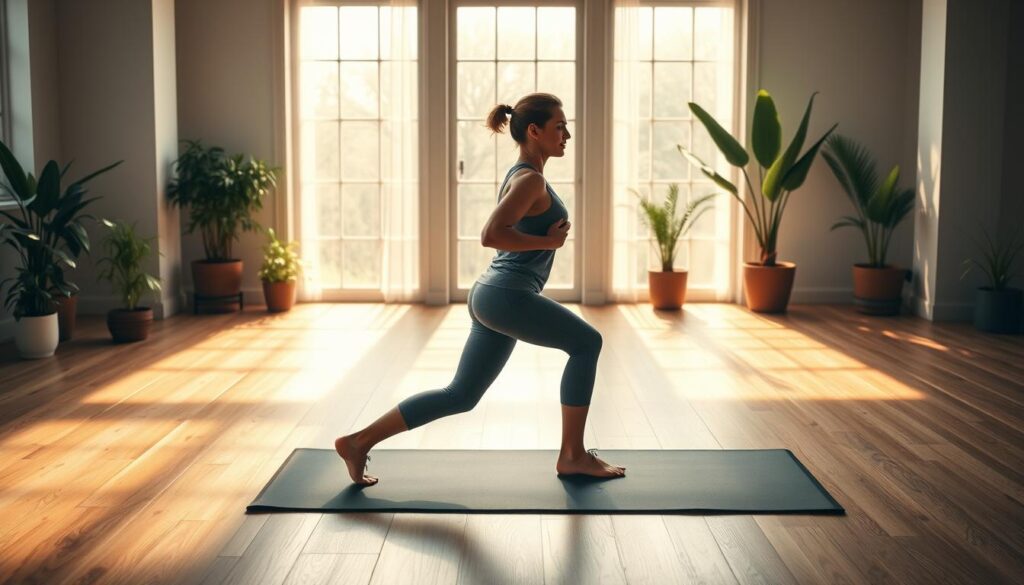
Yoga for runners can be a powerful way to improve flexibility, support recovery, and complement your running routine. Have you ever felt the strain after a long run? The tightness in your quads and calves can be overwhelming. It’s a common experience for many athletes. The repetitive motion of running often leads to discomfort and limited flexibility. This is where complementary movement comes into play.
Kristin McGee emphasizes that integrating specific practices can enhance your overall performance. Improved breathing efficiency, core strength, and mental focus are just a few benefits that can support your running journey. You don’t have to cut back on your training volume to reap these rewards.
This guide will walk you through research-backed benefits, essential poses, and strategies for injury prevention. You will learn how to align your intensity and timing with your training goals and recovery needs. With the right approach, you can transform your running experience.

Edit
Full screen
Delete
yoga for runners
Key Takeaways
- Running often leads to tight muscles, emphasizing the need for flexibility.
- Complementary practices can enhance breathing and strength without reducing run volume.
- Learn about essential poses and injury prevention strategies.
- Align your practices with your training goals for better recovery.
- Discover the mental focus that can improve your performance.
Understanding the Benefits of Yoga for Runners
Do you notice your muscles feeling tight after a long run? This is a common experience among many athletes. Incorporating complementary practices can significantly enhance your performance and recovery. Not only does this approach improve flexibility, but it also supports mental clarity.
Physical and mental advantages abound when you embrace these practices. Research shows that a 2023 study found increased muscular strength in participants who engaged in regular sessions. Additionally, a 2015 study highlighted significant improvements in VO2 max, a crucial performance marker.
Yoga helps open tight hips, quads, and hamstrings, which is essential for optimal running mechanics. Improved flexibility and balance can be achieved through consistent practice, as noted in a 2016 study. Stronger arms, shoulders, and core also complement your running form, especially during sprints and uphill efforts.
How Yoga Enhances Running Performance
After a long run, do you find your body feeling stiff and unyielding? This is a common experience for many athletes. Integrating complementary practices can help enhance your performance significantly.
Improved range of motion is essential. When your hips, hamstrings, ankles, and back move efficiently, you reduce the risk of injury. The National Academy of Sports Medicine notes that running primarily occurs in the sagittal plane, while these practices add crucial frontal and transverse movements.
Balance is equally important. Each stride requires you to stabilize and transfer weight from one leg to another. For instance, the Warrior 3 pose develops ankle mobility and strengthens your feet, making you more stable on uneven surfaces.
Moreover, strength training through these practices can boost muscular endurance. A 2015 study showed improvements in VO2 max and strength after 12 weeks of practice. This structured cross-training can support better posture during longer runs, making your running experience more enjoyable.
Incorporating Yoga Into Your Running Routine
Do you often feel discomfort in your body following a long distance run? Integrating specific practices can greatly enhance your performance and recovery. Kristin McGee recommends practicing two to three times a week. This schedule can include two 20- or 30-minute sessions and one longer 45-minute class.
Moderately paced Vinyasa flows are excellent as dynamic pre-run warm-ups. They prepare your muscles and joints without exhausting your body before training. On the other hand, slower classes like Yin or restorative sessions are perfect after running. These longer holds can help relax hard-working muscles and reduce tension.
Recovery-day practices allow you to stay active while minimizing the repetitive demands of running. Adjust the length, intensity, and poses based on your mileage, workout difficulty, and available time. By finding the right timing for your sessions, you can maximize the benefits and enhance your overall experience.
Dynamic Yoga Poses for a Pre-Run Warm-Up
Do you ever feel a lack of mobility in your body before hitting the pavement? Engaging in dynamic movements can activate your muscles and prepare you for a successful run.
Using Dynamic Movements to Activate Muscles
Dynamic yoga movements take your joints through a controlled range of motion, warming your muscles and prepping your nervous system. This is essential for preventing injuries and enhancing performance.
Examples: Chair Pose and Sun Salutation A
- Chair Pose: Stand tall, then bend your knees and reach your arms overhead. Return to standing and repeat this sequence 10 times. This pose activates your glutes, quads, hamstrings, calves, shoulders, upper back, and core.
- Sun Salutation A: This full-body sequence raises your core temperature and increases blood flow. It includes Mountain Pose, Upward Salute, Standing Forward Bend, Standing Half Forward Bend, Plank, Cobra or Upward-Facing Dog, and Downward-Facing Dog.
- As you flow through these poses, remember to move steadily, breathe continuously, and avoid forcing your heels, knees, hips, or hamstrings toward the floor.
Static Yoga Poses for Post-Run Recovery
Is your body craving relief after an intense running session? Slower movements and static holds can guide your body from the demands of running to a state of calm recovery. This transition is vital for muscle relaxation and overall well-being.
Static stretches are generally recommended for 10-30 seconds, allowing your muscles to release tension effectively. One excellent pose is the Low Lunge, which targets the hip flexors, adductors, glutes, and quadriceps. Holding this position for about one minute can significantly aid in recovery.
Another beneficial pose is the Reclining Pigeon. This gentle stretch helps release tightness in the hips, groin, piriformis, and glutes, which can be especially beneficial after repetitive running.
Lastly, consider incorporating Legs Up the Wall into your routine. This restorative position can be practiced for anywhere from 10 breaths to 10 minutes, providing relief to your legs, feet, and back.
Key Yoga for Runners Poses You Should Master
Are you looking to enhance your running experience? Mastering specific poses can significantly improve your flexibility and strength. Two foundational poses to focus on are the Downward-Facing Dog and the Reclining Hand to Big Toe.
Downward-Facing Dog: Stretching and Strengthening
Downward-Facing Dog, or Adho Mukha Svanasana, is a vital pose. It stretches the hamstrings, calves, foot arches, back, and shoulders. At the same time, it strengthens your arms and abdomen. Make this pose a regular part of your routine to experience its full benefits.
Reclining Hand to Big Toe and Other Essential Moves
Reclining Hand to Big Toe, or Supta Padangusthasana, is another excellent stretch. It targets the hamstrings and should be held for 10 breaths on each side. For added hip mobility, try the Reclining Cow Face, or Supta Gomukhasana, which helps loosen tight glutes and hamstrings.
Don’t forget the Broken Toes Pose, which can be held for 30 seconds to 2 minutes. This pose focuses on the toes, soles, shins, and tibial connective tissues, promoting foot health.
Always remember to modify poses with blocks, pillows, or straps for better balance and comfort. This will help you enjoy your practice and maximize its benefits.
Preventing Injuries and Enhancing Recovery Through Yoga
After finishing a run, do you feel tension lingering in your legs? Addressing this discomfort is crucial for maintaining your running routine. Integrating both dynamic and static stretching techniques can help prevent injuries and enhance recovery.
Dynamic stretching moves your joints through a full range of motion. This is especially beneficial before running, as it warms up your legs and prepares your body for action. In contrast, static stretching involves holding muscles at their maximum comfortable range after your run. This helps release tightness and promotes recovery.
The International Sports Sciences Association highlights that tight muscles and joints can lead to compromised form, increasing the risk of injury. Incorporating poses like Broken Toes Pose can alleviate discomfort associated with plantar fasciitis and shin splints. Additionally, Warrior 3 strengthens your ankle and foot structures, enhancing stability on uneven surfaces.
By combining movement with longer holds, you can enjoy both warm-up and recovery benefits in one practice. Address common muscle imbalances in your hips, quads, calves, and back. Remember, consistent and comfortable practice is more effective than aggressively pushing stiff muscles.
Conclusion
In conclusion, integrating complementary practices can greatly enhance your running journey. These methods help develop strength, mobility, balance, and mental focus, while also improving recovery. Studies from 2015, 2016, and 2023 have shown significant gains in VO2 max, strength, flexibility, and balance.
To maximize benefits, opt for dynamic flows before your runs and slower, restorative work afterward. Following Kristin McGee’s recommendation of practicing two to three times a week will keep you on track. Remember to incorporate essential poses like Chair Pose, Sun Salutation A, Low Lunge, Downward-Facing Dog, and Reclining Pigeon consistently.
FAQ
How can yoga improve my running performance?
Incorporating specific poses can enhance your range of motion, balance, and strength, leading to improved endurance and overall performance.
What are some effective yoga poses for runners?
Essential poses include Downward-Facing Dog, Low Lunge, and Reclining Pigeon, which target key muscle groups like the hamstrings, quads, and glutes.
When is the best time to practice yoga in relation to my runs?
It’s beneficial to include dynamic poses before running to warm up and static poses after running to aid recovery and relaxation.
Can yoga help prevent running injuries?
Yes, yoga can address muscle imbalances and tension, which are common causes of injuries, by promoting flexibility and strength in key areas.
How often should I practice yoga as a runner?
Aim for at least two to three sessions per week, adjusting based on your running schedule and recovery needs.
What should I focus on during my yoga practice?
Concentrate on poses that enhance flexibility in your hips, knees, and back, while also incorporating breathing techniques to promote relaxation.
Do I need any special equipment for yoga?
A yoga mat is essential for comfort and stability. Optional props like blocks or straps can help you achieve better alignment in poses.
Can beginners practice yoga for running?
Absolutely! Many poses can be modified for beginners, making it accessible for anyone looking to enhance their running routine.