
Have you ever felt overwhelmed by the chaos of daily life? You’re not alone. Many seek a way to find peace and balance amidst the noise. Yoga offers a path that transcends mere physical exercise. It invites you to explore a deeper connection between your body and mind.
In Patanjali’s Yoga Sutra, the eightfold path, known as ashtanga, serves as a holistic framework. This ancient wisdom encompasses ethical principles, personal observances, and practical tools for navigating life. By understanding these elements, you can cultivate a sense of balance and harmony.
As you embark on this journey, you’ll discover that yoga is much more than just poses. It’s a comprehensive philosophy that encourages self-awareness and growth. Embracing the eightfold path can lead to profound changes, enhancing your overall well-being.

8 limbs of yoga
Join us as we explore how each limb can support your practice and help you thrive in today’s fast-paced world.
Key Takeaways
- The eightfold path is a holistic framework for balance.
- Yoga is more than just physical exercise; it’s a philosophy.
- Each limb offers practical tools for modern life.
- Understanding these principles can enhance self-awareness.
- Embrace the roots of yoga while applying them today.
Introduction to the 8 Limbs of Yoga
In a world filled with distractions, finding your center can feel challenging. The Yoga Sutras serve as a foundational text, containing 195 aphorisms that explore discipline, consciousness, and the journey to freedom from suffering.
The eight limbs are arranged in a meaningful order. They start with how you relate to others, guiding you towards deeper meditation and self-awareness. This structure emphasizes the importance of ethical living before diving into personal practices.
You’ll encounter the distinction between yamas, which focus on outward interactions, and niyamas, aimed at inner reflection. These complementary practices are essential for daily life.
While many see the mat as the entry point, remember that posture is just one aspect of the path. Each limb invites you to engage with your practice meaningfully, rather than viewing it as a checklist for perfection.
Understanding the Yoga Sutras and Ancient Origins
Seeking peace in today’s fast-paced world often leads to timeless philosophies. The Yoga Sutras are a key element of this ancient wisdom. Traditionally attributed to Patanjali, this text is often described as a “Theory of Everything” by scholars like David Gordon White. It encompasses 195 aphorisms that explore the mind, discipline, and the journey toward liberation.
Modern interpretations of these sutras are influenced by various commentaries and historical contexts. They provide insights into how the teachings can be applied to contemporary life. This journey from India to the West began with influential figures like Tirumalai Krishnamacharya and Paramahansa Yogananda. Their efforts helped introduce these practices to a broader audience.
The Beatles’ famous trip to India in the 1960s also played a significant role in popularizing yoga in Western culture. This interest has evolved, with works like Barbara Stoler Miller’s *Yoga: Discipline of Freedom* and David Gordon White’s *The Yoga Sutra of Patanjali: A Biography* providing deeper insights into the text’s historical significance.
The Role of Ethical Principles in Your Yoga Practice
Amidst the whirlwind of modern existence, ethical principles can serve as your compass. The five yamas are vital commitments that shape how you interact with others, your environment, and yourself. These foundational values guide your journey in yoga and life.
Embracing Ahimsa and Truthfulness
Ahimsa, or non-harming, is more than just avoiding violence. It connects deeply with compassion and social justice. Every choice you make can either reduce or increase harm in the world. Meanwhile, satya, or truthfulness, emphasizes the importance of honest communication. However, it’s essential to ensure your words are thoughtful and respectful, considering their impact on others.
Non-stealing and Non-hoarding as Lifelong Values
Asteya, or non-stealing, extends beyond material possessions. It involves respecting others’ time, energy, and boundaries. Finally, aparigraha, or non-hoarding, encourages a mindset of gratitude and sustainability. By fostering balanced relationships with material things, you can cultivate a richer, more fulfilling life.
Mastering the 8 limbs of yoga in Your Daily Practice
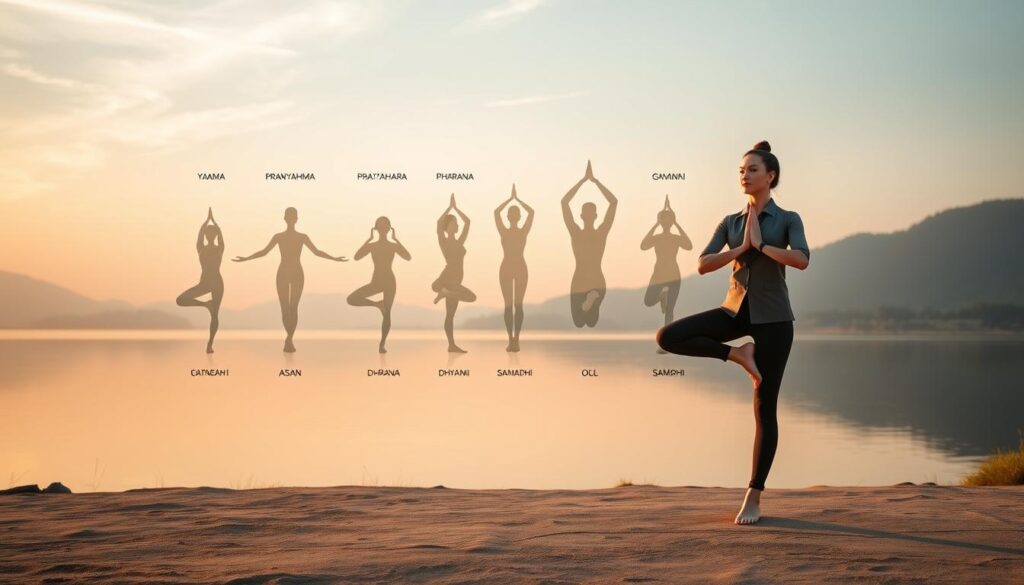
Navigating the complexities of daily life can often leave you searching for balance. The eightfold path offers a structured approach to cultivate harmony in your routine. This progression begins with ethical foundations, guiding you through physical preparation, breath regulation, sensory withdrawal, concentration, meditation, and contemplation.
Importantly, achieving “mastery” doesn’t mean you must perfect one limb before exploring another. Contemporary practitioners often blend these practices, moving fluidly between them. This flexibility allows you to discover what resonates most with your journey.
To create a daily framework, start with one ethical intention. Carry this intention onto your mat, and conclude with a brief period of breath or meditation. Repeating small practices fosters discipline without adding pressure or turning yoga into a performance standard.
Ultimately, this complete path aligns with Patanjali’s aim: moving toward freedom from suffering, rather than achieving a specific physical appearance.
Holistic Integration for Mind and Body Balance
As you navigate through daily challenges, discovering tranquility may feel like a quest. Integrating asana and meditation can significantly enhance your practice. In the Yoga Sutras, asana originally referred to a comfortable seat, setting the stage for deeper practices like pranayama and meditation.
Today, asana encompasses a wide range of physical postures. A steady posture prepares your body and mind for breath awareness and meditation. Pairing a short sequence of asanas with quiet sitting transforms movement into a bridge for internal observation.
Incorporating self-awareness techniques can deepen your experience. Notice your muscular effort, emotional reactions, and breathing patterns without immediate judgment. This mindful approach allows you to integrate movement, breath, and reflection, making your practice sustainable amidst life’s changes.
Harnessing Pranayama for Energy and Calm
Harnessing the breath can lead to a profound sense of energy and tranquility. Pranayama, or breath control, is a vital aspect of your practice. It can significantly influence your energy levels, attention, and response to stress.
One effective method is the 1:4:2 breath control technique. In this practice, you inhale for one second, retain your breath for four seconds, and then exhale for two seconds. In Sanskrit, these actions are known as Purak (inhalation), Kumbhak (retention), and Rechak (exhalation).
As you advance, you might explore techniques that incorporate bandhas, or bodily “binds.” This can enhance your practice, but it’s essential to seek guidance from a qualified yoga teacher to ensure safe execution.
Always begin gently, prioritizing comfort. If you experience dizziness or discomfort, stop the technique immediately. Your journey into breathwork should feel empowering and calming.
From Sense Withdrawal to Enlightened Meditation
Finding calm amidst chaos often begins with turning your attention inward. The practice of pratyahara teaches you to notice sounds, sights, and sensations without letting them control your focus. This step is crucial for developing a deeper connection with your inner self.
Once you master pratyahara, you can move to dharana, which is the art of concentration. This involves focusing on a single point, like a candle flame or an image of a deity. Such practices help train your mind to remain steady and present.
As you progress, you enter the realm of dhyana, where sustained meditation occurs. Here, your attention stays with one chosen object, allowing distractions to fade away. This leads to samadhi, a state of pure contemplation. In this state, you merge with your meditation object, experiencing profound peace.
Finally, consider nirbija-samadhi, or “seedless contemplation.” This advanced state goes beyond traditional practices, offering a unique depth to your journey.
Decolonizing Yoga and Honoring Its Authentic Roots
In a world where ancient traditions meet modern practices, understanding the roots of yoga is essential. This journey takes us back to the Indus Valley and Egypt, civilizations that have influenced yoga for over 5,000 years. Recognizing this history is crucial for a meaningful practice.
Decolonizing yoga means embracing its full eight-limbed philosophy while uplifting Black and Brown teachers. This movement seeks to challenge cultural appropriation, ableism, and classism within the yoga community. By acknowledging these issues, you can create a more inclusive space.
Learning the True History of Yoga
Yoga’s journey from India to the United States was shaped by figures like Tirumalai Krishnamacharya and Paramahansa Yogananda. Their teachings brought authentic practices to the West, but many now reduce yoga to branded postures on a mat.
Embracing Diversity in the Yoga Community
To honor yoga’s roots, it’s vital to support diverse voices. Encouraging inclusivity challenges limited ideas about who belongs in this practice. By doing so, you enrich your experience and deepen your connection to the path.
Practical Tips to Deepen Your Yoga Practice
Incorporating yoga into your daily routine can transform your life. You can start by choosing one yama or niyama each morning. This allows you to translate it into specific behaviors that impact your words, decisions, and relationships.
Consider practicing gratitude as a modern interpretation of santosa, or contentment. Identify supportive aspects of your life instead of measuring success through constant achievement or comparison.
Building tapas, or disciplined effort, can be achieved through a realistic daily routine. This may include a few minutes of asana, breath awareness, journaling, or meditation on and off the mat.
Additionally, apply svadhyaya by reflecting on your reactions, habits, and values during challenging moments. This self-inquiry fosters personal growth.
Lastly, create a sustainable weekly rhythm that connects ethical actions, physical postures, and present-moment awareness. This approach allows you to embrace your practice without demanding a rigid lifestyle.
Conclusion
In the hustle and bustle of everyday life, finding inner peace can feel elusive. The journey through the eightfold path moves from ethical conduct and personal observances to asana, breath, sensory awareness, concentration, meditation, and contemplation.
Your practice can extend beyond the mat. It encompasses relationships, work, community participation, and self-reflection. Remember, Patanjali’s path focuses on freedom from suffering rather than mere flexibility or competition.
Begin with one accessible limb today. Consider practicing ahimsa, engaging in truthful communication, or taking a few moments for mindful breath or meditation. The eightfold path is an evolving way to cultivate balance, presence, compassion, and a deeper connection between body and mind in the wider world.
FAQ
What are the main benefits of practicing yoga?
Practicing yoga can enhance your physical health, improve flexibility, and promote mental clarity. It also fosters a deeper connection between your body and mind, helping you to manage stress and find inner peace.
How often should I practice yoga to see results?
To experience significant benefits, aim for at least two to three sessions per week. Consistency is key, so find a routine that fits your lifestyle and stick with it.
Do I need to be flexible to start yoga?
No, flexibility is not a requirement. Yoga is about progress, not perfection. With regular practice, you will naturally become more flexible over time.
What should I wear to a yoga class?
Wear comfortable, breathable clothing that allows for easy movement. Avoid overly loose garments that may get in the way during poses.
Can yoga help with anxiety and stress?
Yes, yoga can be a powerful tool for managing anxiety and stress. The combination of breath control, movement, and meditation promotes relaxation and mental clarity.
What is the difference between Hatha and Vinyasa yoga?
Hatha yoga focuses on static postures and alignment, while Vinyasa involves a flowing sequence of poses linked with breath. Both styles offer unique benefits and can be chosen based on your preferences.
How can I deepen my yoga practice?
To deepen your practice, consider exploring different styles, attending workshops, or incorporating meditation and breathwork into your routine. Staying open to learning will enhance your journey.
Is it necessary to have a yoga teacher?
While many people benefit from guidance, especially when starting, you can also practice independently. Online resources and classes can supplement your learning, but a teacher can provide personalized feedback.