
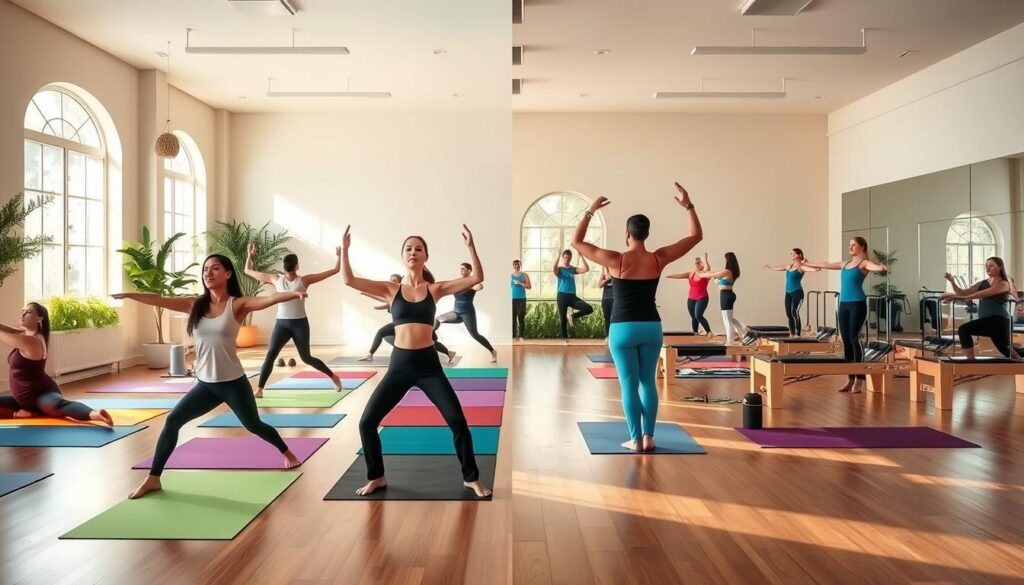
When it comes to enhancing your fitness journey, the choices can feel overwhelming. Two popular options are often at the forefront: one focuses on flexibility and mindfulness, while the other emphasizes core strength and stability. Both offer unique benefits, but which one aligns with your personal goals?
Imagine stepping onto your mat, ready to explore a world where your body moves gracefully and your mind finds peace. In a 2017 survey, it was revealed that one in seven adults in the U.S. practiced yoga, with a remarkable 94% citing overall wellness as their primary reason. This reflects a growing desire for health and balance in our fast-paced lives.
On the other hand, the other method is often chosen for its controlled movements and strength-building aspects. The best choice for you depends on what you aim to achieve—whether it’s improving flexibility, enhancing core strength, or managing stress.

yoga vs pilates
In this article, we will delve into the key differences in movement, breathing techniques, and class formats. By understanding these distinctions, you can make an informed decision that best suits your fitness aspirations.
Key Takeaways
- Both practices are low-impact and utilize body weight for resistance.
- Your choice should align with your fitness goals, such as flexibility or core development.
- Yoga has gained popularity, with many practicing for overall wellness.
- Controlled strength and stability are often the focus of the other method.
- Understanding differences in movement and instructor guidance is essential.
Understanding the Fundamentals of Yoga and Pilates
As you embark on your fitness adventure, you’ll encounter unique approaches tailored to various goals. Yoga is a mind-body practice that blends physical poses, breathing techniques, and mindfulness. It encourages you to focus on how your body feels during each movement. A popular style, Hatha, is slow-paced and ideal for beginners, allowing for gradual learning.
On the other hand, Pilates emphasizes alignment and precision. This method focuses on controlled movements that activate your core and build full-body strength. Unlike isolated abdominal work, Pilates incorporates six key principles: breathing, centering, concentration, control, flow, and precision. You can practice it on a mat or specialized equipment.
In a typical yoga class, you may flow through or hold poses, while a Pilates class often involves deliberate repetitions and alignment cues. Both practices offer distinct benefits, enhancing flexibility and strength in unique ways.
Key Benefits: Flexibility, Core Strength, and Mind-Body Wellness
In your pursuit of fitness, you may find yourself weighing various options. Both practices offer significant advantages that can enhance your overall health and well-being.
Flexibility is a hallmark of yoga, promoting mobility in tight areas like hips and shoulders. Many people find that regular practice leads to improved range of motion. On the other hand, Pilates focuses on core strength, which can enhance posture and stability. Controlled movements in Pilates also help build endurance and balance.
Additionally, yoga can be beneficial for those managing anxiety, depression, and chronic pain. Approximately 94% of practitioners report practicing for overall wellness. In contrast, studies show that Pilates may reduce pain and disability, particularly in conditions like back pain and multiple sclerosis.
Both practices encourage breathing and mindfulness, which can significantly reduce stress. Engaging in these movements fosters mental focus and awareness, making each session a holistic experience.
History and Origins: From Ancient India to Modern Rehabilitation
Exploring the roots of fitness practices reveals fascinating histories that shape our understanding today. Yoga traces its origins back over 5,000 years to ancient India, where it was first mentioned in the Vedas. This practice emphasized relaxation, exercise, breathing, diet, positive thinking, and meditation, forming a holistic approach to health.
In contrast, Joseph Pilates, born in Germany in 1883, studied various disciplines, including yoga and martial arts, to enhance his health. His experiences during World War I, working with injured soldiers, led him to develop a method focused on rehabilitation. This method gained traction when he brought it to New York City in 1923, where it was embraced by dancers, actors, and athletes.
Both practices have evolved significantly. Today, they are recognized not only for their physical benefits but also for their ability to promote mental well-being. The blend of ancient traditions and modern techniques offers a comprehensive approach to fitness.
yoga vs pilates: Comparing Their Impact on Core Strength and Posture
As you explore different fitness options, understanding how each practice impacts your body is crucial. Both yoga and Pilates offer unique approaches to developing core strength and enhancing posture.
In yoga, participants typically hold a position or flow into another, which can build stability and flexibility. This practice often emphasizes longer stretches that promote mobility, particularly around the spine and hips.
Conversely, Pilates focuses on controlled movements that challenge the core while the limbs move. This method enhances core stabilization and alignment, making it a direct option for building strength.
Both practices can support posture improvement. Pilates strengthens the core, glutes, and upper back, while yoga enhances awareness and mobility. However, neither practice is a magic shortcut for weight loss; consistent effort and a balanced lifestyle are key.
A review of 23 studies on Pilates found that 17 reported reduced pain and disability, especially for those with back pain. This highlights the health benefits of both practices.
Choosing the Right Classes and Instructors for Your Needs
Selecting the right class can significantly impact your fitness journey. Both practices offer unique benefits, and understanding what to look for can enhance your experience.
When considering a class, review its pace and pose difficulty. It’s important to check the modification policy to ensure that adjustments are available for different skill levels. A relaxation component can also be beneficial for overall well-being.
What to Look for in a Yoga Class
For beginners, Hatha yoga is often recommended due to its slow pace and gentle introduction to poses. Always seek a certified instructor to ensure safety and proper guidance.
Pilates Class Essentials and Equipment Considerations
Mat Pilates is an accessible starting point, often requiring just a mat and optional props like a block or Pilates ring. Equipment-based sessions may utilize specialized machines with springs and levers.
If you have pain, reduced mobility, or pregnancy-related restrictions, be sure to ask instructors about modifications. It’s also wise to consult with a medical professional if you have conditions like glaucoma that may affect your ability to perform certain positions safely.
Integrating Both Practices into a Balanced Fitness Routine
Incorporating various fitness practices can lead to a more balanced and effective routine. By blending different workouts, you can target multiple aspects of your health and well-being.
Combining Workouts for Optimal Results
Consider the following plans to integrate both methods into your weekly schedule:
- For beginners, try one session of each practice weekly. This allows you to compare both without overwhelming your schedule.
- If your focus is on core strength, aim for two sessions of the strength-based method and one session of the other.
- For greater mobility and relaxation, prioritize two sessions of the flexibility-focused practice and one of the strength-based method.
Adapting to Your Schedule and Fitness Goals
Two to three sessions per week can yield noticeable progress. However, even one consistent session can support gradual improvement. Remember to complement your routine with walking, enjoyable cardio, and strength training, as these can enhance weight management and overall fitness.
Conclusion
Deciding on the best approach to your fitness goals can often feel like navigating a maze. Each practice offers unique benefits that cater to different needs.
Choose the first method if you aim for flexibility, balance, and relaxation. It’s ideal for enhancing breath-led movement and overall wellness.
Opt for the second method if your focus is on core strength, posture, and stability. Its controlled movements can help improve alignment and support your fitness journey.
Both options are low-impact and adaptable, making them suitable for many individuals. Try attending a class for each style to see which resonates with you.
Combining both practices with activities like walking and strength training can lead to a balanced routine. This holistic approach supports overall health and weight management.
FAQ
What are the main differences between yoga and Pilates?
The primary difference lies in their focus. Yoga emphasizes flexibility, mindfulness, and breathing techniques, while Pilates concentrates on core strength, stability, and controlled movements. Both practices enhance overall fitness but approach it in unique ways.
Can I practice both yoga and Pilates?
Absolutely! Many people find that integrating both practices into their routine offers a balanced approach to fitness. Combining the flexibility and mindfulness of yoga with the core strength and stability of Pilates can lead to improved overall health.
How do I choose the right class for me?
Look for classes that align with your fitness goals and experience level. If you’re seeking relaxation and flexibility, a gentle yoga class may be ideal. For strength and core focus, consider a Pilates class that emphasizes equipment like reformers or mats.
What should I wear to class?
Wear comfortable, breathable clothing that allows for movement. For Pilates, form-fitting attire can help instructors see your alignment, while yoga classes may benefit from looser clothing that accommodates various poses.
How often should I practice to see benefits?
Practicing two to three times a week can yield noticeable benefits. Consistency is key, whether you focus on one practice or alternate between both to enhance your strength, flexibility, and overall wellness.
Can these practices help with back pain?
Yes, both can be beneficial for alleviating back pain. Yoga helps improve posture and flexibility, while Pilates strengthens the core muscles that support the spine. Always consult with a healthcare professional before starting any new exercise routine, especially if you have existing pain.
Do I need special equipment for Pilates?
While many Pilates exercises can be done on a mat, equipment like reformers and resistance bands can enhance your workout. Check with your instructor to see what’s available in your class and what you might need.