
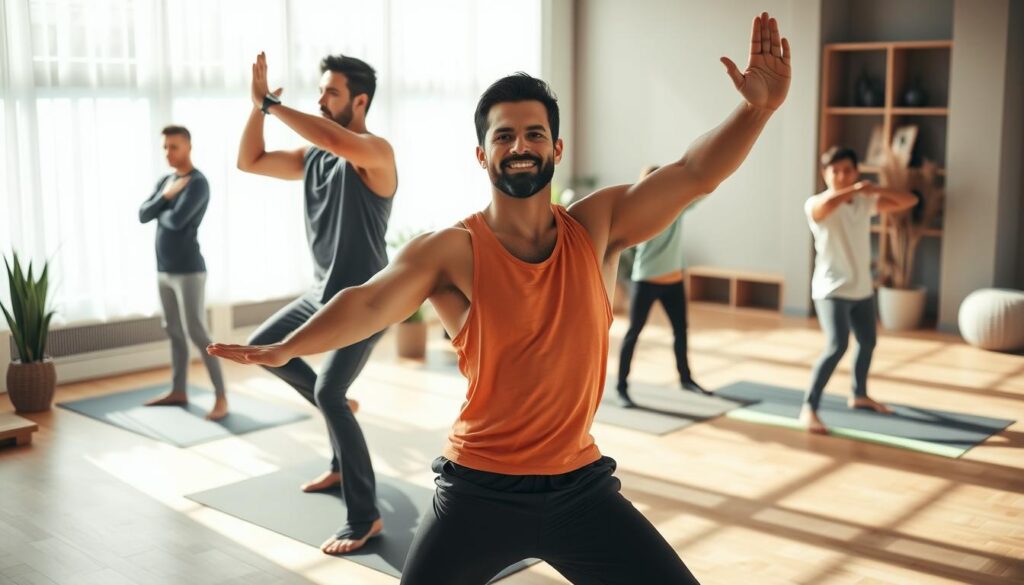
Imagine standing tall, feeling a surge of energy coursing through your body. You take a deep breath, and in that moment, everything feels possible. This is the essence of movement that can transform your daily routine. Strength and flexibility are not just physical attributes; they represent the balance we seek in life. The practice you are about to explore offers a path to achieve that balance.
With roots tracing back over 5,000 years, this practice is not just about the poses. It’s about connecting with your body, enhancing your strength, and finding relief from daily stress. As you delve into simple movements, you will target tight areas such as the hips, shoulders, and lower back, commonly affected by workouts and long hours at a desk.
Whether you are a beginner or looking to refine your skills, this journey is tailored for you. You will discover clear techniques, breathing guidance, and modifications that make it easy to practice at home or in a studio. Let’s embark on this journey together, unlocking your body’s potential and embracing the power of movement.

Edit
Full screen
Delete
yoga for men
Key Takeaways
- This guide introduces practical training methods to improve strength and flexibility.
- Learn simple poses that target commonly tight areas of the body.
- Progress from accessible stretches to more demanding stability work.
- Each movement includes clear cues and breathing guidance.
- Practice safely at home or in a studio with helpful modifications.
Introduction: Embracing Yoga for Men
Picture yourself grounded, with energy radiating from your core. This practice is not just for those who are naturally flexible or experienced. It’s an inclusive journey that welcomes everyone.
According to Paige Greenfield, a contributing editor at Men’s Health, this approach supports fitness, mobility, and recovery needs. You will discover how this practice can enhance your strength training. It combines controlled positions, muscular endurance, balance, and deliberate breathing.
Start with simple modifications, like bent knees and shorter holds. Using supportive props can make the experience more accessible. The following sections will connect each pose to goals you can relate to, such as stronger legs, freer hips, and healthier shoulders.
Why Yoga is Vital for Your Strength and Flexibility
Visualize a world where every movement feels effortless and invigorating. Many believe that this practice is just about stretching, but it offers so much more. It can enhance your strength, flexibility, and overall well-being.
Michelle Baldino, a full-time instructor since 2012, emphasizes that this practice improves not only physical attributes but also mental clarity. Regular engagement can lead to:
- Improved concentration and better sleep habits.
- Reduced stress levels, thanks to deep breathing techniques.
- Enhanced heart health and sexual performance.
Moreover, styles like Vinyasa can elevate your heart rate, integrating strength and endurance. As you work on mobility in your hips, shoulders, and spine, you will notice a significant reduction in tension and strain. This holistic approach supports athletic conditioning, making it beneficial for everyone.
Yoga for Men: Poses to Boost Strength and Mobility
Experience the invigorating sensation of strength building with every pose. This routine offers a progressive sequence of eight primary movements, carefully selected to enhance your strength and mobility.
Start with gentle stretches that release tension in your back. Gradually, you will transition to more demanding poses that engage your legs, shoulders, hips, chest, and core. The sequence includes:
- Forward Fold
- Downward-Facing Dog
- Chair
- Crescent Lunge
- Warrior I
- Bridge
- Half Bow
- Boat Pose
Utilizing the Crescent Lunge as a pre-workout movement can be beneficial. It helps address tight hips, which are often linked to lower back pain and knee strain. Meanwhile, the Boat Pose introduces a core challenge that can be held for 30 seconds, gradually increasing as your control improves.
Forward Fold: A Foundational Stretch
Feel the gentle release of tension as you bend forward, inviting relaxation into your body. The Forward Fold is an essential pose that stretches your hamstrings, calves, and hips while strengthening your legs and knees. It serves as a warm-up movement that prepares your body for deeper stretches.
To perform this pose:
- Stand with your feet hip-width apart.
- Hinge at your hips, lowering your torso while keeping your back straight.
- Allow your head, neck, and shoulders to relax as you bend your knees generously.
- Hold opposite elbows or ankles, and breathe deeply.
- Let gravity help lengthen the back of your body without forcing your hands toward the floor.
- Maintain this position for one minute, then slowly roll back to standing, vertebra by vertebra.
It’s important to keep your knees bent, especially if you are new to this practice. This reduces pressure on your lower back and hamstrings. As you hold the pose, focus on your breath; steady breathing can help alleviate neck and shoulder tension, potentially supporting healthier blood pressure over time.
Downward-Facing Dog: Full Body Strength and Stretch
Feel the invigorating stretch as you lift your body into an upside-down V shape. This pose not only enhances flexibility but also builds strength in your arms, legs, and core. According to Men’s Health, it effectively stretches the feet, shoulders, hamstrings, and calves.
To perform this pose:
- Start on your hands and knees, with your hands shoulder-width apart.
- Spread your fingers wide and press firmly into the floor.
- Tuck your toes and lift your hips upward, creating that V shape.
- Keep your spine long, pressing your chest toward your thighs.
- Relax your head and neck, allowing them to hang freely.
- If your hamstrings are tight, feel free to bend your knees gently.
Men’s Health recommends holding this position for three minutes. As you progress, you can rest and repeat the pose to enhance your practice. This dynamic stretch is a great way to relieve stress while improving your overall strength.
Chair Pose: Building Leg and Core Stability
Imagine the strength flowing through your legs as you hold a powerful position. Chair Pose is an excellent way to enhance your stability while working on your endurance. This pose stretches your shoulders and chest while strengthening your thighs, calves, spine, and ankles. It’s a fantastic addition to your routine.
To perform this pose effectively:
- Stand with your big toes touching and feet firmly planted.
- Inhale deeply, raising your arms overhead.
- As you exhale, bend your knees and lower your hips back as if sitting in a chair.
- Ensure your knees stay behind your toes, pressing your weight into your heels.
- Engage your core and lengthen your spine with each breath.
- Hold this position for 30 seconds, then rise back to standing or transition into another pose.
As you deepen your practice, you may find your thighs parallel to the floor. This pose develops strength in your legs and core while improving overall body awareness. It’s a great way to relieve stress and build a solid foundation for other movements.
Crescent Lunge: Unlocking Hip Flexibility
Envision a powerful stance that opens your hips and strengthens your core. The Crescent Lunge is essential for targeting tight hip flexors and groin muscles. This pose not only enhances flexibility but also builds strength in your thighs, legs, arms, and core.
To perform this pose effectively:
- Begin on your hands and knees, then step your right foot between your hands.
- Ensure your right knee is directly above your heel.
- Lift your back knee off the floor, pressing the back heel toward the wall.
- Lengthen your spine and gently allow your hips to move forward.
- As a beginner, keep the back knee on the floor while maintaining a stable front knee.
Hold this position for one minute, then switch sides. Men’s Health recommends repeating each side twice. Engaging in this pose regularly can reduce the risk of lower back pain and knee strain, enhancing your overall athletic performance.
Warrior I: Opening Up for Upper Body Power
Envision a dynamic stance that not only opens your body but also elevates your spirit. The Warrior I pose is essential for building strength in both your upper and lower body. According to Men’s Health, this position stretches your shoulders and hips while enhancing overall stability.
To perform this pose effectively:
- Begin from a Crescent Lunge, rotating your back foot so the heel presses down.
- Turn both hips toward the front, ensuring they face forward.
- Raise your arms beside your head, relaxing your shoulders away from your neck.
- Lift your torso away from the front thigh while keeping the front knee aligned and behind your toes.
- Hold this position for one minute, then switch sides, using steady breathing to develop concentration and stamina.
Maintaining proper alignment is crucial. Ensure your front knee does not extend past your toes to build strength around the knee. This powerful pose can help reduce tension and improve your overall performance.
Bridge Pose: Enhancing Chest and Respiratory Health
Feel the energy surge through your body as you raise your hips, opening your chest to the world. The Bridge Pose is a powerful movement that strengthens your glutes, hamstrings, and lower back while stretching your chest, neck, and spine. This pose not only enhances your physical strength but also promotes better breathing.
To perform this pose:
- Lie on your back with your knees bent and feet hip-width apart. Ensure your heels are close enough to touch with your fingertips.
- Press your feet and palms into the floor as you lift your hips, keeping your knees directly above your heels.
- For added shoulder opening, interlace your fingers beneath your body, but avoid putting pressure on your neck.
- Hold this position for 45 seconds, repeating three times while lowering with control after each exhalation.
According to Men’s Health, opening tight rib-cage muscles can lead to fuller, easier breaths. This practice may also support your performance during physical activities. Embrace the strength and flexibility this pose brings, enhancing your overall well-being.
Boat and Half Bow Poses: Strengthening the Core and Back
Envision a practice that not only strengthens your core but also improves your overall balance. The Boat Pose is a fantastic way to engage your deep core, hip flexors, and arms. It requires you to maintain an upright torso while balancing your legs. To perform this pose:
- Sit with your knees bent and feet flat on the floor.
- Engage your core, lift both legs to a 45-degree angle, and extend your arms beside your legs.
- Maintain a straight spine, bending your knees slightly if necessary to keep your torso upright.
Hold the Boat Pose for 30 seconds, gradually working up to one minute. This will enhance your core strength and stability.
Next, the Half Bow Pose complements this by adding back-body strength. It pairs one lifted thigh with an active arm-and-ankle connection. Here’s how to do it:
- Lie on your stomach, bending your right knee and reaching back to grab your ankle.
- Lift your right thigh and chest off the floor, engaging your back muscles.
- Hold for 30 seconds, then switch sides.
Practicing both poses helps create a balance between strong abs and back muscles, reducing the risk of lower back strain.
Conclusion
Consider the profound impact of integrating movement into your daily routine. Using poses like Forward Fold, Downward-Facing Dog, and Bridge can create a balanced full-body sequence. Start with comfortable ranges, bent knees, and shorter holds. This approach helps you build strength without risking injury.
It’s essential to repeat both sides evenly in movements such as Crescent Lunge and Warrior I. This practice supports balanced strength and mobility. Keep your spine long and your knees aligned while focusing on controlled breathing.
Men’s Health recommends specific targets: one-minute holds for Forward Fold, three minutes for Downward-Facing Dog, and 45 seconds for the Bridge. Consistent practice can help you address tight hips, shoulders, and lower back while enhancing your overall strength for daily activities.
FAQ
What are the benefits of practicing yoga?
Practicing yoga can enhance your strength, flexibility, and overall well-being. It helps relieve stress, improves posture, and promotes better breathing, which can be beneficial for your physical and mental health.
How often should I practice these poses?
It’s recommended to practice regularly, ideally 2-3 times a week. Consistency is key to building strength and flexibility over time.
Can beginners perform these poses safely?
Yes, beginners can safely perform these poses by following step-by-step instructions and listening to their bodies. Modifications are available to accommodate different skill levels.
Do I need special equipment for these practices?
No special equipment is necessary. A yoga mat and comfortable clothing are usually sufficient to get started.
What should I do if I feel pain during a pose?
If you experience pain, it’s important to stop immediately. Listen to your body and consider modifying the pose or consulting a professional for guidance.
How can I improve my flexibility over time?
Regular practice, focusing on breath control, and gradually increasing the intensity of your stretches can help improve your flexibility over time.
Is it normal to feel tightness in my muscles when starting?
Yes, it’s common to feel tightness, especially if you’re new to stretching. With consistent practice, you’ll likely notice an improvement in muscle tension.
Can these poses help with back pain?
Many poses can strengthen the back and improve posture, which may alleviate back pain. However, it’s essential to practice with proper form and consult a healthcare provider if pain persists.