
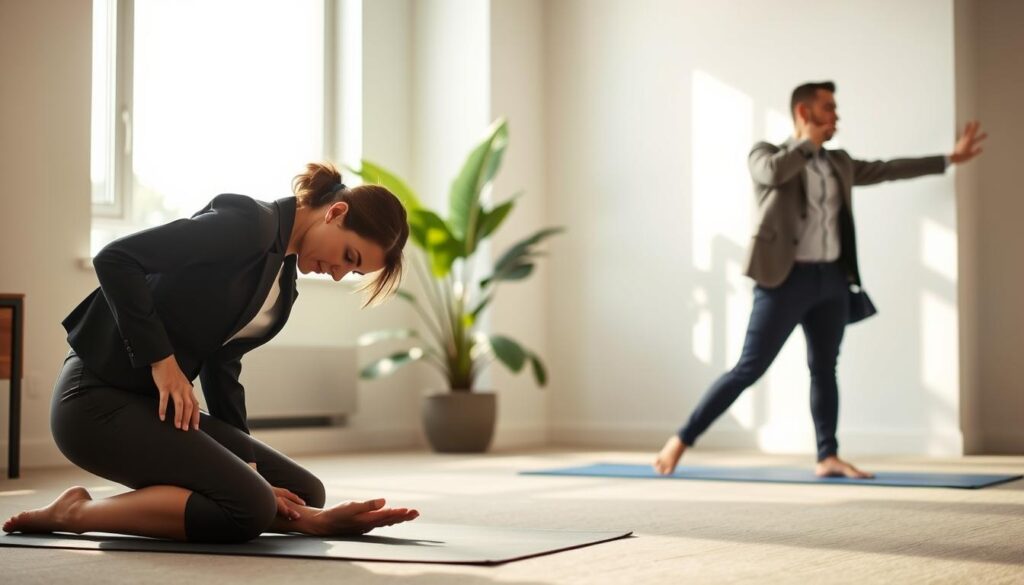
Have you ever felt the weight of the day settle on your shoulders after hours of sitting? It’s a common struggle, especially when your work demands your attention for long stretches. You might find yourself glued to your desk, your body yearning for movement. This feeling can lead to discomfort and even health issues over time.
Imagine taking just a few minutes to reconnect with your body. Incorporating simple movements into your day can help alleviate the tension built from hours of inactivity. You don’t need special gear or a lot of time. With just a standard chair and your desk, you can engage in exercises that refresh your mind and energize your body.
This article will guide you through practical movements, including chair-supported stretches and breathing techniques, that fit seamlessly into your busy schedule. You’ll discover how these brief breaks can transform your workday, leaving you feeling more vibrant and focused.

yoga for office workers
Key Takeaways
- Simple movements can interrupt long periods of sitting.
- Just a few minutes of activity can ease discomfort.
- No special equipment is needed; use your chair and desk.
- Engage in chair-supported stretches and breathing exercises.
- Feel more energized and focused throughout your workday.
Understanding the Effects of Prolonged Sitting
Have you realized the toll that extended sitting takes on your body? Spending long hours at your desk can lead to serious posture issues. One common problem is exaggerated kyphosis, where the thoracic spine rounds forward. This can cause discomfort in your back, neck, and shoulders.
When you sit hunched over, you may experience tightness in your shoulders and neck. Additionally, this position can lead to headaches and poor balance. It’s important to be aware of how your everyday habits, like using your smartphone, can affect your spinal alignment.
Inactive muscles and compressed hips contribute to discomfort and reduced movement quality. This can also hinder your ability to concentrate at work. Moreover, a sedentary lifestyle is linked to health risks, including heart disease and diabetes. Making small adjustments can significantly improve your well-being.
Chair Yoga: Transforming Your Desk into a Yoga Studio
Is the discomfort from sitting too long creeping into your daily routine? You can easily incorporate chair-supported poses into your workday. A standard office chair can serve as a perfect substitute for specialized yoga chairs. This makes practicing movements realistic for most environments.
Additionally, your desk can provide support for your hands while you lengthen your spine and open your shoulders. The standing preparation pose creates a right-angle shape with your body. This position not only stretches the hamstrings but also prepares your chest, back, arms, and shoulders.
Here are some tips to ensure safety and effectiveness:
- Press your palms firmly into stable furniture before shifting your feet or body weight.
- Work within a comfortable range to avoid strain.
- Avoid furniture that rolls, swivels, or feels unstable during movement.
Desk-Friendly Yoga Poses to Boost Energy
Does the strain of prolonged sitting leave you feeling drained and lethargic? You can easily counteract this fatigue with some simple desk-friendly poses. These movements not only invigorate your body but also help improve your posture.
Start with the Seated Mountain Pose. Take five breaths while reaching your arms overhead. This pose expands your chest and encourages an upright spine, providing a refreshing reset after hours of sitting.
Next, try the Standing Side Stretch. Hold this pose for two to five breaths on each side to create length through your ribs, hips, and side body. It’s a great way to relieve tension in your torso.
Incorporate the Supported Chair Pose by placing your fingertips on the desk and lifting your heels. Take five deep breaths to awaken your legs and energy levels.
Finally, practice the Standing Forward Bend. Keep your knees slightly bent and hold for three to five breaths. This stretch helps alleviate strain on your lower back while countering the effects of a compressed posture.
Mind-Body Connection: Breathing and Meditation Techniques
Have you noticed how your breath changes when you’re stressed or tired? This awareness can be a powerful tool. Incorporating breathing exercises into your routine can help you release tension and restore calm.
One effective technique is Sitali breathing. Practice this for three minutes by inhaling over a curled tongue and exhaling through your nose. This cooling breath can help alleviate stress and physical tension during your busy day.
Another invigorating option is the Breath of Fire. This involves 100 swift nasal exhalations followed by a deep inhalation and three small inhalations. This technique can enhance mental clarity and energize your body.
To deepen your practice, consider pairing breathwork with short meditation. You can follow sequences like Elena Brower’s, which combines movement, awareness, and quiet reflection, creating a holistic approach to your well-being.
Stretches for the Neck, Shoulders, and Back
Have you ever noticed tightness creeping into your neck and shoulders after long hours at your desk? This discomfort can lead to tension and pain, making it essential to incorporate stretches into your day.
Start with gentle neck stretches. Stand in your cubicle and slowly tilt your head to the sides, breathing deeply. This helps relieve tightness without forceful pulling.
Next, add the seated Cat-Cow pose. Repeat this three to five times, alternating between the rounded Cat position and the lifted-chest Cow position. This movement mobilizes your spine and can ease potential headache-related tension.
For targeted shoulder releases, raise one arm, bend the elbow, and use the opposite palm to create controlled space. This simple action can significantly reduce shoulder tension.
Finally, try Eagle Arms to alleviate tightness in your shoulders and upper back. This pose is especially beneficial if you spend long hours typing at your desk.
Essential yoga for office workers Poses to Ease Tension
Do you often find yourself wishing for a break from the strain of sitting? It’s crucial to incorporate some gentle movements into your day. These poses can help alleviate discomfort and promote relaxation.
Start with the chair-supported hip opener. Place your right outer ankle on your left thigh, ensuring gentle foot flexion to protect your knee. This simple adjustment can create a wonderful stretch in your hips.
If your heels can’t comfortably reach the floor, try a seated forward release. Use books or magazines under your feet for support. Remember to keep your sitting bones grounded while folding forward, allowing your lower back to release tension.
Next, consider adding the chair-supported Bharadvajasana. With each inhalation, lift your torso, and as you exhale, gently turn your body. This practice enhances spinal mobility and encourages a sense of calm.
These seated and standing variations are quick relief options for tight hips, glutes, legs, shoulders, and back muscles. Incorporating them into your breaks can make a significant difference in how you feel throughout the day.
Combining Movement and Mindfulness for Better Workdays
Do you sometimes feel the day’s stress weighing heavily on your body after hours at your desk? Integrating movement into your work breaks can enhance both your physical energy and mental balance. Consider incorporating practices suggested by Elena Brower, which can be done before work, between meetings, or whenever you have a moment.
The complete desk yoga sequence includes 16 different practices. This variety allows you to choose one or several movements that fit your schedule. You don’t have to complete them all at once; instead, break them into brief blocks throughout your day.
Pairing standing movements with seated breathing exercises can be particularly effective. For example, try opening your chest before meetings and releasing shoulder tension midday. Finally, take a moment for calming breaths before leaving work. Remember to focus on your breath and body position, ensuring comfort rather than rushing through each pose.
Additional Tips for a Healthier Work Routine
Have you ever noticed how a few simple adjustments can transform your work routine? Making small changes can significantly enhance your comfort and productivity throughout the day.
To maintain a healthy posture, set reminders to stand up regularly. This can help you realign your spine, relax your shoulders, and change your position instead of sitting for long hours.
Check that your feet are supported and your knees are comfortable. Ensure your chair and desk are stable during your practice. These adjustments can prevent discomfort and promote better posture.
Incorporate brief stretches between tasks. This helps make posture correction a habit rather than a reaction to pain. Consider exploring Yoga Selection, which offers over 650 on-demand classes and live sessions tailored to your needs.
With a 14-day free trial available, you can try their office sequence without needing special equipment. Embrace these tips to create a healthier work environment!
Conclusion
Have you felt overwhelmed by the demands of your day, especially after long hours at your desk? Incorporating simple movements can help you manage discomfort and stress.
Accessible exercises allow you to move your back, hips, shoulders, and legs without leaving your workspace. A stable chair or desk can support effective poses, ensuring your hands, feet, knees, and back stay comfortable.
Additionally, brief breathing and meditation practices can enhance your focus and calmness during busy days. These techniques fit seamlessly into your routine, whether before meetings or during breaks.
Start with one comfortable pose, practice consistently, and listen to your body. If you feel pain or instability, stop and adjust. Your well-being is worth the effort!
FAQ
What are the benefits of incorporating stretches into my workday?
Incorporating stretches can help alleviate tension, improve posture, and enhance overall energy levels. This can lead to increased productivity and a more comfortable work environment.
How often should I take breaks to stretch at my desk?
It’s recommended to take a break every hour to stretch and move around. Even a few minutes of stretching can make a significant difference in how you feel throughout the day.
Can I perform these poses while wearing business attire?
Yes! Many desk-friendly poses can be done in business attire without any issues. Just choose movements that feel comfortable and maintain your professionalism.
What if I have limited space at my desk?
Most of the exercises require minimal space. You can perform seated stretches or simple arm and neck movements without needing much room at all.
Are there specific poses that target lower back pain?
Yes, poses that focus on the lower back, such as seated twists and gentle forward bends, can help relieve discomfort and promote flexibility in that area.
How can I improve my breathing while working?
Practicing deep breathing exercises can help reduce stress and improve focus. Try inhaling deeply through your nose and exhaling slowly through your mouth for a few minutes.
Is it possible to practice mindfulness at my desk?
Absolutely! You can practice mindfulness through short meditation sessions or simply by taking a moment to focus on your breath and clear your mind.
What are some quick stretches I can do at my desk?
Simple stretches like shoulder rolls, wrist stretches, and neck tilts can be done quickly at your desk to relieve tension and improve circulation.