
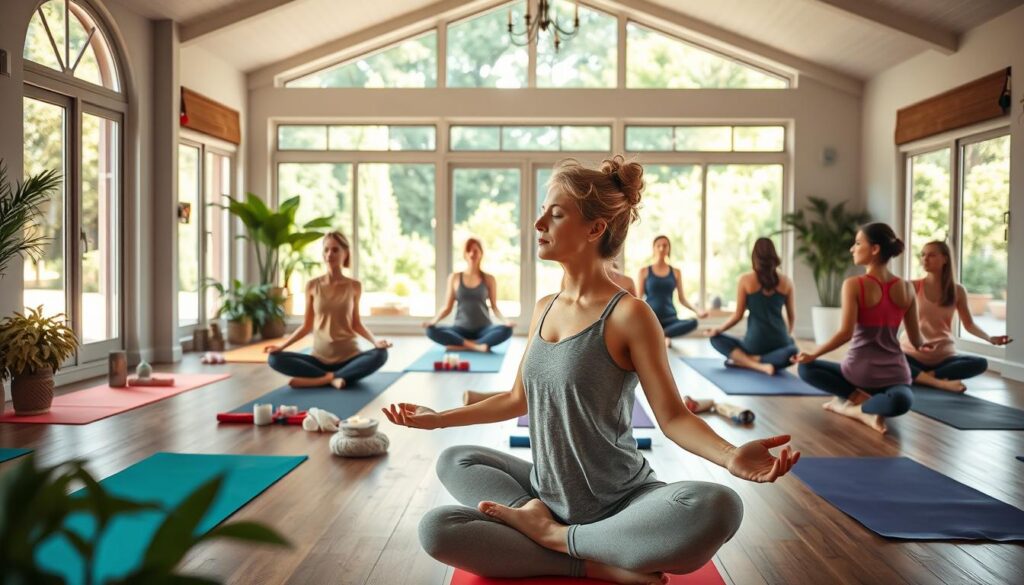
As you navigate through life’s transitions, the changes your body experiences can feel overwhelming. Perimenopause often begins in your 40s, leading to a series of physical and emotional shifts that can disrupt your daily life. You might find yourself searching for ways to find balance and comfort during this time.
Imagine a practice that not only helps your body but also nurtures your mind. Yoga offers a holistic approach to managing these changes, combining movement, breathing, and mindfulness. A recent meta-analysis of over 2,000 women revealed that this practice can significantly reduce psychological and physical symptoms associated with this transition.
With over 30 years of experience, Rachel Zinman emphasizes the importance of a supportive practice. She began her journey at age 17 and understands firsthand how beneficial it can be. This guide aims to empower you with the tools you need to embrace this phase of life with confidence and grace.

yoga for menopause
Key Takeaways
- Perimenopause can start in your 40s and last up to 8 years.
- Yoga provides a practical mind-body approach during hormonal changes.
- Research shows yoga can help alleviate psychological and physical symptoms.
- Practicing regularly may improve sleep, mood, and overall well-being.
- Experienced instructors can guide you through this transformative journey.
Introduction to Menopause and the Role of Yoga
Transitioning through different life stages can be a complex journey. During this time, many women encounter changes that can be both physical and emotional. Perimenopause is often the starting point, lasting up to eight years, and leads to various menopause symptoms.
As estrogen and progesterone levels fluctuate, your body may struggle with temperature regulation, sleep disturbances, and mood swings. It’s important to note that approximately 60% of women experience mild symptoms, while 20% face more severe challenges.
Incorporating calming movements and mindfulness practices can significantly benefit your nervous system. These techniques help reduce the intensity of symptoms like hot flashes and night sweats. Evening sessions can also support better sleep, preparing your mind and body for a restful night.
Understanding Menopausal Symptoms and Their Impact
Navigating the waves of change during life’s transitions can be challenging. Many women experience common symptoms such as hot flashes, mood swings, and anxiety. These symptoms can significantly affect your daily quality of life.
As estrogen levels decline, you may notice joint discomfort and fatigue. This hormonal shift can also lead to sleep disruptions and brain fog. It’s crucial to understand how these changes impact your overall health.
Research indicates that regular practice can increase GABA levels, a neurotransmitter linked to relaxation. This means that incorporating gentle movements and supported poses may help alleviate tension and promote emotional balance.
Gentle spinal movements and shoulder releases can provide relief without adding strain. Remember, you’re not alone in this journey. Many women share similar experiences, and finding support through these practices can make a difference.
Essential Yoga Poses for Menopause Relief
Embracing the changes of life can sometimes feel like an uphill battle. However, incorporating gentle movements can provide much-needed relief. Below are some beginner-friendly poses that support joint comfort and emotional balance.
Start with the Cat-Cow pose, which helps mobilize the spine. This can be practiced for 1-2 minutes. The Fan Pose stretches the hamstrings and inner thighs, promoting relaxation. For a gentler option, try the Sphinx Pose, which is a great alternative to more intense backbends.
Cooling poses such as the Supported Child’s Pose can be held for 3-5 minutes, offering a soothing experience during hot flashes. Additionally, Reclining Bound Angle Pose and Legs-Up-the-Wall can be practiced for 5-10 minutes to help calm the nervous system.
As you practice, remember to use props like blankets or cushions for added support. If you have any health concerns, such as osteoporosis or high blood pressure, consult a professional before starting these practices.
How Yoga for Menopause Supports Your Nervous System
The journey through life can bring unexpected changes that affect your well-being. During this time, it’s essential to understand how your body’s systems respond. The sympathetic system is often linked to the body’s fight-or-flight response, while the parasympathetic system promotes rest and recovery.
Practices like the Cat-Cow pose can illustrate this balance. The Cow position opens the chest, energizing you, while the Cat position encourages a more relaxed state. This dynamic helps you connect with your body and its responses.
Research shows that engaging in restorative practices can enhance your emotional steadiness. Gentle inversions, such as Legs-Up-the-Wall, help calm the autonomic nervous system, promoting relaxation and improved sleep preparation. As you practice, focus on your breath, allowing each inhalation and exhalation to support your journey.
Alternating between energizing and calming movements can be beneficial. Pay attention to your current fatigue, sleep quality, and temperature sensitivity. This mindful approach helps you tailor your practice to your unique needs.
Breathing Techniques and Mindfulness for Symptom Relief
Navigating life’s changes can often feel like a daunting task. Breathing techniques and mindfulness practices can help ease discomfort during this time. These methods not only support relaxation but also enhance your overall well-being.
One effective technique is the Three-Part Breath. Inhale deeply into your belly, then expand your ribs, and finally fill your chest. Reverse this sequence while exhaling. Practice this for 2-3 minutes to promote calmness.
Another valuable practice is Alternate Nostril Breathing. This involves closing one nostril while inhaling through the other. Alternate for 5-8 rounds to settle your mind and prepare for restful movements in the evening.
Lastly, try Sheetali. Inhale through a curled tongue or pursed lips, then exhale slowly through your nose. This can be practiced for 2-3 minutes and is particularly refreshing.
Research indicates that paced breathing at 6-8 breaths per minute can significantly reduce hot-flash frequency and severity. Pairing breath awareness with short mindfulness sessions can help you notice anxiety, temperature changes, and muscle tension without judgment.
Developing a Personalized Menopause Yoga Routine
The shifts your body undergoes during this phase can be both surprising and challenging. Crafting a personalized routine can empower you to manage these changes effectively. Consider designing a morning energizing sequence and an evening cool-down session.
For your morning routine, aim for 10-15 minutes. Include poses like Cat-Cow, Warrior II, and Bridge Pose. Pair these with Alternate Nostril Breathing to help reduce stiffness and boost energy.
In the evening, focus on a 15-20 minute sequence. Incorporate Reclining Bound Angle, Forward Fold, and Legs-Up-the-Wall. Use calming techniques like Three-Part Breath or Sheetali to prepare for restful sleep.
Practice three to four times a week, adjusting your routine based on daily symptoms and energy levels. On tougher days, shorter 10-minute sessions can keep you engaged without overwhelming your body. Tracking your symptoms can also help identify which practices serve you best.
Incorporating Restorative and Cooling Yoga Practices
The changes your body undergoes during this phase can lead to a quest for comfort and ease. Embracing restorative and cooling movements can significantly enhance your well-being. These practices focus on relaxation and reducing excess heat, which is essential for many women experiencing symptoms.
Supported, floor-based poses held for three to ten minutes can encourage deep relaxation without creating excessive heat. Consider the following practices:
- Legs-Up-the-Wall: Hold for five to ten minutes to settle tired legs and support relaxation, creating a gentle transition toward sleep.
- Supported Child’s Pose: Use a bolster or pillow for three to five minutes to reduce pressure and encourage emotional release.
- Reclining Bound Angle: Practice for approximately five minutes with cushions beneath the knees to ease pelvic and hip tension.
It’s also beneficial to practice in a cool, ventilated room. Hot flashes can affect up to 75% of women during this time, so maintaining a comfortable environment is key.
Additional Wellness Tips and Lifestyle Adjustments
Life’s transitions can bring about a mix of challenges and opportunities for growth. To navigate this phase effectively, consider integrating nutrition and stress management into your daily routine.
Start by focusing on balanced meals and staying hydrated. Consistent meal timing can be a practical foundation for energy, bone health, and overall self-care. Additionally, managing stress is crucial. Persistent stress can worsen sleep disruption and emotional distress, making symptoms feel more intense.
Incorporate weight-bearing standing poses like Warrior II, Tree, and Triangle. These can help support balance, strength, and bone health, especially as you face an increased risk of osteoporosis.
Regular movement is essential too. Research links it to improved circulation, lower blood pressure, and reduced stress. Lastly, combining evening practices with a consistent bedtime routine can significantly enhance sleep quality, addressing fatigue and brain fog.
Exploring Various Yoga Styles for a Holistic Approach
Finding the right approach to wellness can feel like a journey of discovery. With over 100 forms of practice available, it’s essential to explore different styles to see what resonates with you. Each type offers unique benefits that can enhance your experience during this transitional phase.
Gentle Hatha techniques focus on alignment, balance, and breath control. This style is perfect for beginners seeking a slower pace and longer holds. In contrast, Restorative and Yin practices typically hold poses for 3-10 minutes, promoting deep relaxation and emotional release.
If you’re looking for a more dynamic practice, Vinyasa links breath with movement, creating a rhythmic flow that can energize you. However, be cautious with Bikram and hot practices, which use heated environments around 40°C/104°F, potentially exacerbating overheating.
- Iyengar: Focuses on precise alignment using props.
- Ashtanga: A more demanding sequence for those seeking intensity.
- Yoga Nidra: Known as Non-Sleep Deep Rest (NSDR), it offers profound relaxation.
Choosing a style should reflect your symptoms, fitness level, and temperature sensitivity. By exploring various practices, you can find the best fit for your unique needs.
Conclusion
Transitioning into this new phase of life can feel both challenging and enlightening. Remember, menopause officially begins after 12 months without a period, while perimenopause may start in your 40s and last up to 8 years. A recent meta-analysis involving over 2,000 women highlights the potential benefits of movement for several symptoms associated with this transition.
One study even reported a 66% reduction in hot-flash frequency after just 10 weeks, although individual results may vary. It’s essential to combine poses, breathing techniques, mindfulness, restorative movements, nutrition, and stress management rather than relying on one method alone.
Always modify any movement that causes pain or unusual fatigue, and consult a qualified healthcare professional when needed. Finally, embrace a compassionate and flexible routine that adapts to your changing body, energy levels, and symptoms.
FAQ
What are the common symptoms of menopause?
Common symptoms include hot flashes, night sweats, mood swings, fatigue, and insomnia. These can vary in intensity and duration for each individual.
How can yoga help with hot flashes?
Specific poses and breathing techniques can promote relaxation and balance, helping to reduce the frequency and intensity of hot flashes.
What are some beginner-friendly poses for menopause relief?
Poses like Child’s Pose, Cat-Cow, and Legs-Up-the-Wall are gentle and effective for relieving tension and discomfort.
How does the nervous system relate to menopause symptoms?
The nervous system plays a key role in regulating bodily functions. Stress can exacerbate symptoms, while yoga helps to balance the parasympathetic and sympathetic systems.
What breathing techniques can support symptom relief?
Techniques such as Sheetali breath and deep abdominal breathing can promote relaxation and help manage anxiety and stress.
How can I create a personalized yoga routine for menopause?
Consider incorporating energizing poses in the morning and calming, restorative practices in the evening to suit your individual needs.
What are restorative yoga poses?
Restorative poses, such as Supported Bridge and Reclining Bound Angle Pose, focus on relaxation and deep breathing, providing a calming effect on the body and mind.
How can nutrition support menopause wellness?
A balanced diet rich in whole foods, healthy fats, and adequate hydration can help manage symptoms and support overall health during menopause.
What are the differences between Hatha, Restorative, and Vinyasa yoga?
Hatha focuses on basic postures and alignment, Restorative emphasizes relaxation and gentle stretching, while Vinyasa involves a dynamic flow of movements linked with breath.