
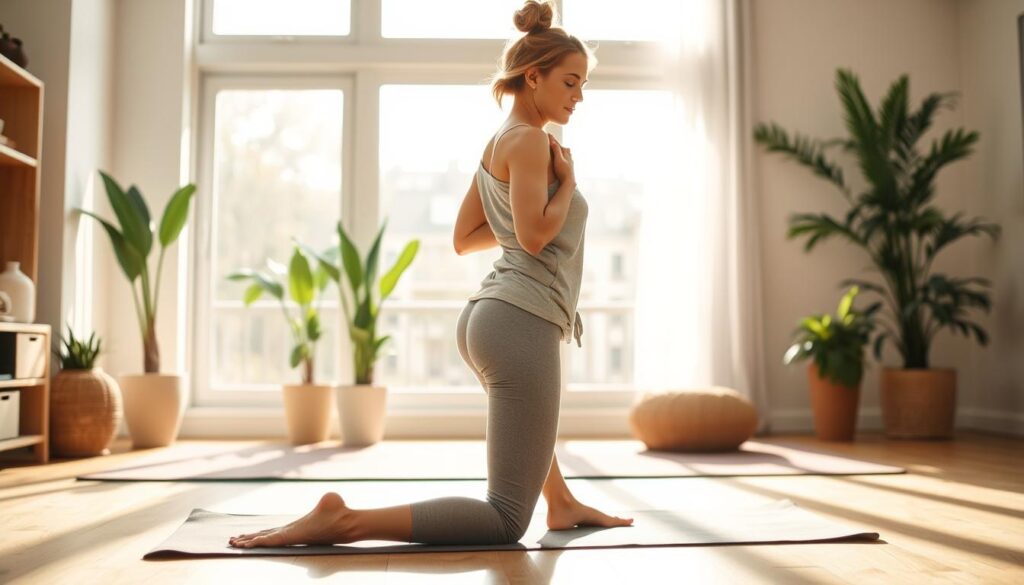
Have you ever felt the pull of a calming space, a place where you can reconnect with your body and mind? Many people seek that sanctuary, yet life often gets in the way. Establishing a home routine doesn’t need to feel overwhelming. Think of it like making a simple peanut-butter toast; it can be as quick as two minutes or as fulfilling as ninety.
Incorporating even a few minutes of gentle movement into your day can bring remarkable benefits. Renowned teachers like Sarah Powers suggest that dedicating just 15 to 20 minutes can help align your day and refocus your attention. Starting small, with just five minutes of five poses, can make all the difference.
Creating a welcoming space on your mat can transform your sessions from a chore into a cherished moment. This article will guide you through practical tips on timing, space, and poses, ensuring your journey remains enjoyable and meaningful.

Edit
Full screen
Delete
how to start a home yoga practice
Key Takeaways
- Consistency is more about habit than duration.
- Five minutes can be enough to begin your journey.
- A welcoming mat can make practice feel inviting.
- Aligning your routine with your life enhances commitment.
- Small, manageable goals lead to sustainable growth.
Starting Your Home Yoga Journey
Imagine stepping into a tranquil space where your body and mind can unite. This journey begins with defining your personal goals. Consider what you truly seek from your sessions. Is it stress relief, improved mobility, or perhaps emotional balance? Knowing your intentions will shape your experience.
Jason Crandell likens attending classes to being chauffeured, while home practice is like receiving car keys without a map. This transition can feel unfamiliar, yet it offers a surprising sense of freedom. Mark Whitwell emphasizes viewing this practice as a relationship between breath, body, and daily life, rather than a performance.
Start with four or five poses that resonate with you. This approach creates motivation through enjoyment rather than fear or guilt. Remember, an effective routine doesn’t require elaborate setups. Embrace the simplicity and let your journey unfold naturally.
Understanding the Benefits of a Home Yoga Practice
Picture a serene environment where you can nurture your body and spirit. Engaging in solo sessions fosters self-observation. You’ll become more aware of changing physical sensations, emotions, and energy levels. This awareness can lead to greater emotional balance.
Jason Crandell highlights that regular practice cultivates self-regulation and self-soothing. You learn to respond thoughtfully to your current state. As you repeat your sessions, you’ll notice that the benefits multiply. Cyndi Lee states that consistency allows yoga’s rewards to double and then double again.
Adjusting the duration and intensity of your practice means you can choose what suits you best. Whether you seek restorative, grounding, or energizing work, the flexibility enhances your experience. Mark Whitwell compares daily yoga to taking a shower, framing it as a simple pleasure rather than a chore.
How to Start a Home Yoga Practice
Consider a quiet corner where you can pause, breathe, and reconnect with yourself. Begin by choosing a safe, comfortable location for your mat. Spend several breaths noticing how your body and mind feel in this space.
Amy Pearce-Hayden recommends starting in a comfortable seated position or even Corpse Pose. This stillness-first approach helps you assess your energy levels. From there, decide if you want restorative, vigorous, grounding, or energizing movements.
Bobby Quillard suggests a five-minute entry point. This makes your first session manageable, even if committing to a full class feels intimidating. A simple 10-minute sequence can include:
- Reclining Big Toe Pose
- Downward-Facing Dog
- Low Lunge
- Pigeon
- Child’s Pose
Remember, it’s important to pause, modify, and stop when needed. This approach builds confidence rather than strain or self-doubt.
Designing a Routine That Fits Your Life
Envision a schedule that accommodates both your commitments and your well-being. Finding time for movement can feel challenging, yet it’s essential for your overall balance. Sarah Powers suggests dedicating 30 minutes three or four times a week, or opting for 15 to 20 minutes daily when longer sessions aren’t feasible.
Amy Pearce-Hayden emphasizes that even 10 or 15 minutes can make your day feel more spacious. Incorporating a brief morning routine or a calming evening reset can fit seamlessly into your lifestyle.
Consider this: Jason Crandell advocates for two 20-minute sessions daily, including energizing Sun Salutations in the morning and relaxing forward bends before bed. This flexible approach allows you to adapt your routine based on your needs.
Scheduling your sessions in your calendar and setting a timer can help you maintain commitment. By choosing a minimum time that feels achievable, you’ll ensure your routine complements your busy life rather than adding stress.
Setting Up a Dedicated Practice Space
Creating a dedicated space for your practice can significantly enhance your experience. It doesn’t have to be large or lavish. Even a small area can serve as your sanctuary. Cyndi Lee practiced for years in a narrow space between her fireplace and coffee table. This shows that size isn’t everything.
Keeping your mat visible is another effective strategy. It acts as a cue, encouraging you to begin your session with less hesitation. You might find inspiration in Bobby Quillard’s resourcefulness. He used a beach towel, couch cushions, and even a dog leash to improvise his equipment.
As you grow more comfortable, consider investing in some basic gear. Items like Manduka’s Unblok recycled-foam block and Yoga Hustle straps can enhance your practice. These are affordable options that can be gradually added to your setup.
Focus on reducing distractions and creating a comfortable atmosphere. Arrange lighting, temperature, and privacy to suit your needs. This thoughtful approach can lead to a more enjoyable and consistent experience.
Creating Flexible and Enjoyable Yoga Routines
Imagine the joy of mixing various movements to keep your routine exciting. Adapting your sessions can enhance your experience and keep you engaged. Jason Crandell suggests adjusting the pace and intensity according to your needs. This could mean incorporating restorative work, standing poses, backbends, and inversions.
Sun Salutations serve as a versatile foundation. They can be vigorous with Chaturanga Dandasana or gentle with lunges and low Bhujangasana. This flexibility allows you to tailor your flow to match your energy levels.
Cyndi Lee emphasizes the importance of including movements in every direction. This means incorporating side bends, forward and backward movements, twists, and inversions. By doing so, you create a well-rounded routine that feels fresh and inspiring.
- Combine restorative, strengthening, mobility-focused, breath-centered, and meditative elements.
- Choose slower restorative work when tired and more vigorous movements when you need clarity.
- Vary pace, pose duration, music, sequencing, and class formats for an enjoyable experience.
Choosing Poses and Building Sequences
Consider the various poses that can elevate your experience and bring balance to your body. As you embark on this journey, starting with accessible poses is essential. You might find joy in Downward-Facing Dog, Low Lunge, Child’s Pose, and gentle seated folds.
Jason Crandell’s method encourages you to choose three categories of poses. For example, select standing poses, twists, and shoulder openers. From each category, pick four poses. This approach helps create a well-rounded routine.
Arranging your sequences logically can enhance your practice. Begin quietly, warm up your body, explore a focus area, and gradually return to stillness. Adjusting the duration and repetition of poses can cater to your needs, whether you seek contemplation or energy.
Every sequence should conclude with accessible neutralizing poses and at least five minutes of Savasana. As Crandell states, “Ending your session with stillness allows the benefits to settle.”
Incorporating Mindfulness and Intention
Consider the power of intention as a guiding light in your daily practice. Setting a clear intention before you begin can enhance your experience significantly. You might choose to create spaciousness, calm your mind, or simply observe your emotions without judgment.
Amy Pearce-Hayden emphasizes that intentions can transform even the briefest sessions into meaningful moments. This approach allows you to move with purpose rather than mechanically flowing through familiar shapes.
Patricia Walden reminds us, “If you can breathe, you can do yoga.” This highlights the importance of breathwork and meditation, especially on days when physical movement feels challenging.
As you practice, focus on noticing your breath quality, physical sensations, and emotions. Avoid labeling your experience as successful or unsuccessful. This mindfulness can lead to better decision-making, allowing you to adjust your sequence as your needs become clearer.
Leveraging Online Classes and Expert Guidance
Consider the vast array of resources available online to enrich your practice. Engaging with trusted platforms can enhance your experience significantly. You can evaluate online classes by checking teacher credentials, alignment instructions, and modifications. This ensures that your learning journey remains safe and effective.
Bobby Quillard recommends pausing or rewinding online classes to review alignment. Additionally, consulting books and YouTube tutorials can deepen your understanding. Beginner programs like A Beginner’s Guide to Yoga with Nikki Estrada, Learn to Flow with Dianne Bondy, and Foundations of a Lifelong Yoga Practice with Nam Chanterrwyn provide structured guidance.
Remember, using online instruction doesn’t mean sacrificing body awareness. Feel free to pause, modify, or skip poses as needed. Rodney Yee suggests practicing with a friend for accountability, making your online learning both consistent and enjoyable.
Adapting Your Practice for Life’s Challenges
During challenging times, small acts of self-care can bring immense relief. Finding ways to incorporate brief sessions into your day can help maintain your connection to your body and mind.
Jason Crandell suggests a short sequence designed to create momentum after approximately 10 minutes. This can easily fit into your busy schedule. Amy Pearce-Hayden reinforces that even 10 or 15 minutes can make the remainder of your day feel more spacious.
Here are some quick options for those hectic days:
- A few mindful breaths followed by one gentle pose.
- A short restorative sequence to reset your energy.
- Jason Crandell’s 10-minute series to boost focus.
Patricia Walden also recommends gentle pranayama or meditation while in bed or waiting during a conference call. These practices remind you that self-care can happen anywhere.
Replace all-or-nothing thinking with flexible choices. Treating simple activities like mindful dishwashing or calm breathing as extensions of your practice can help you stay connected, even when movement feels impossible.
Overcoming Obstacles and Staying Consistent
Think about the challenges that can arise when trying to maintain a consistent practice. You may encounter fear of incorrect alignment, lack of motivation, or even perfectionism. Addressing these feelings is crucial for your journey.
Jason Crandell identifies complacency, fear, and busyness as major obstacles. Understanding these barriers can help you pinpoint why your routine may slip. Sarah Powers emphasizes that just 20 minutes each day can be more valuable than 90 minutes twice a week. This approach reinforces the idea that consistency trumps intensity.
Mark Whitwell compares daily practice to taking a shower, highlighting the importance of habit formation. You can view your sessions as ordinary self-care rather than a daunting task. Consider using calendar appointments, timers, and accountability partners to stay on track.
Self-compassion is essential when you miss a day. Embrace flexibility in your routine and remember that every small commitment counts. With supportive guidance, you can navigate through obstacles and keep your practice alive.
Personal Tips and Expert Insights for Home Yoga
Reflect on the journey of others who have found joy and success in their personal routines. One practitioner gradually moved from fear of inversions to achieving an unsupported headstand after one or two years of exploration. This same individual maintained an independent routine for four years, even after welcoming two babies within two years.
Bobby Quillard’s story is equally inspiring. He creatively used a dog leash as a yoga strap and a Star Wars VHS box set as a yoga block. These adaptations show that creativity can eliminate financial barriers when beginning your journey.
Jason Crandell’s insights, published on December 6, 2007, remain relevant today. His central lesson emphasizes realistic consistency rather than reliance on fleeting trends. These experiences highlight that progress can emerge through privacy, repetition, experimentation, and adapting your routine to real-life responsibilities.
Conclusion
Reflect on the journey you’ve embarked on, filled with opportunities for growth and self-discovery. Begin with a manageable commitment, as Bobby Quillard suggests—just five minutes, five poses, or five breaths can make a difference.
Choose movements that bring you joy and maintain a realistic duration. Instead of mimicking a full studio class, follow Jason Crandell’s flexible approach of 2 to 90 minutes. Protect your regular practice time; Sarah Powers emphasizes that 20 minutes daily can be more beneficial than an occasional 90-minute session.
Utilize a dedicated area and simple household items to make your sessions easier to maintain. Return to breath and body awareness whenever life’s challenges arise. Self-compassion will guide you through interruptions, ensuring your journey remains fulfilling.
FAQ
What equipment do I need for my yoga sessions?
All you really need is a comfortable mat. Some may find props like blocks or straps helpful, but they aren’t necessary to get started.
How long should my yoga sessions be?
Even a short session of 10-15 minutes can be beneficial. As you grow more comfortable, you can gradually increase the duration.
Can I practice yoga without a teacher?
Absolutely! Many people enjoy practicing independently. Just ensure you have reliable resources like videos or books to guide you.
What if I don’t have enough space at home?
You can create a small practice area. Just enough room for your mat is sufficient. A corner of your living room or bedroom can work perfectly.
How do I stay motivated to practice regularly?
Setting a consistent schedule and mixing up your routines can keep things fresh and exciting, helping you stay engaged.
What are some beginner-friendly poses I can try?
Start with basic poses like Downward Dog, Child’s Pose, and Mountain Pose. These are great for building strength and flexibility.
How can I incorporate mindfulness into my practice?
Begin each session by taking a few deep breaths and setting an intention for your practice. This can help center your mind.
Is it normal to feel intimidated by starting yoga?
Yes, many feel this way initially. Remember, yoga is a personal journey, and it’s perfectly okay to start at your own pace.
How can I make my practice more enjoyable?
Experiment with different styles and music. Finding what resonates with you can transform your experience into something truly enjoyable.
Can I practice yoga with my dog?
Yes! Many people enjoy including their pets in their practice. Just be mindful of their movements and ensure your space is safe.