
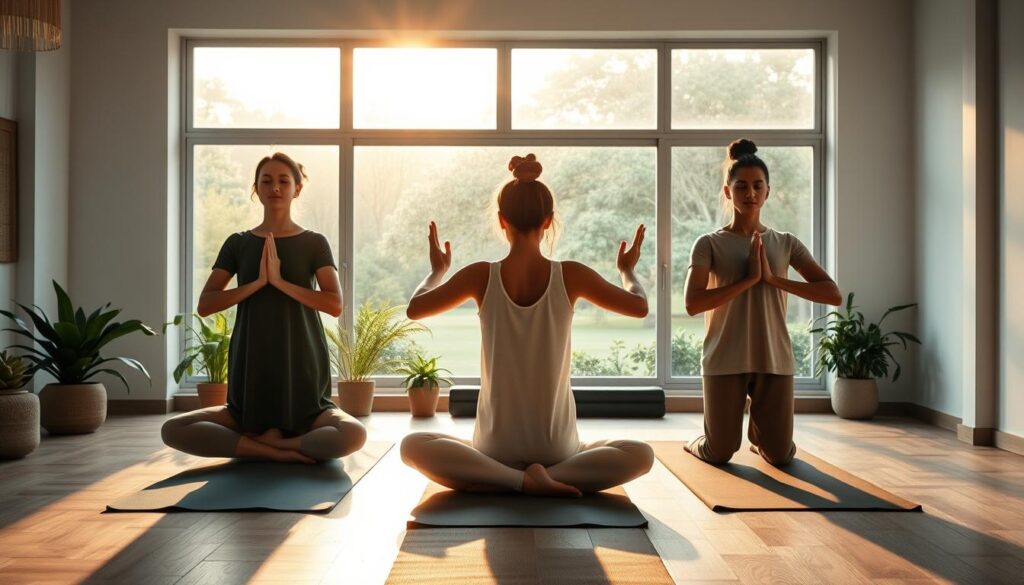
In our fastpaced world, stress often feels like a constant companion. You may find yourself yearning for a moment of peace amidst the chaos. This is where the beauty of mindful practices comes into play. By embracing these techniques, you can cultivate a sense of calm that nourishes both your mind and body.
Guided by Lindsay Grabb’s insights from her heated power studio in South Minneapolis, this guide will help you explore the profound connection between breath awareness and mental clarity. You don’t need specialized equipment or years of experience to start your journey. The focus here is on creating a sustainable daily practice that fits into your life.
Instead of chasing perfection, you’ll learn how to engage with the present moment. This guide aims to empower you with tools to reduce stress, enhance body awareness, and foster inner peace. Let’s embark on this journey together, discovering the transformative benefits that await.

Edit
Full screen
Delete
yoga and meditation
Key Takeaways
- Mindful practices can significantly reduce stress and enhance well-being.
- Breath awareness is key to achieving mental clarity.
- Creating a daily routine is more beneficial than striving for perfection.
- You can practice these techniques without any special equipment.
- Focus on the present moment to cultivate a deeper sense of peace.
Embracing the Journey: An Introduction to Yoga and Meditation
With daily pressures mounting, many seek a refuge from the chaos. This is where the beauty of mindful practices emerges. At its core, yoga is a holistic discipline rooted in ancient Indian traditions. The Sanskrit word for yoga means “union” or “connection,” emphasizing the harmony between mind, body, and spirit.
Asanas, or physical postures, are essential in this practice. They help develop strength, flexibility, and body awareness. Alongside these poses, breath control plays a crucial role in calming the mind. On the other hand, mindfulness meditation, which has deep roots in Buddhism, encourages observing thoughts and feelings without judgment.
Peloton instructor Mariana Fernández highlights that while yoga often involves movement, meditation typically embraces stillness. Dr. Marlynn Wei, a board-certified psychiatrist, notes that yoga encompasses postures, breathwork, and meditation. Beginners can start their journey with just a few quiet minutes, focusing on their breath or finding a comfortable pose.
Understanding the Benefits of Yoga and Meditation
In a world filled with constant demands, achieving serenity can seem challenging. However, engaging in mindful practices can significantly enhance your overall well-being. Regular sessions of these techniques offer numerous benefits for both your body and mind.
Physical postures play a crucial role in improving flexibility, cardiovascular health, and balance. They help you move with greater ease and enhance body awareness. According to Dr. Marlynn Wei, a consistent practice can lead to better sleep, improved immune function, and a more positive mood.
On the mental side, these practices support stress relief and emotional balance. Seated and guided techniques are particularly effective for reducing anxiety and enhancing concentration. Even a single session can boost cognitive performance and promote a greater sense of peace.
By combining yoga meditation with mindfulness techniques, you can cultivate a deeper connection to your inner self. This holistic approach not only benefits your physical health but also fosters a sense of inner peace.
The Power of Mindfulness in Your Yoga Practice
Life’s challenges can often feel overwhelming, making it essential to find moments of tranquility. Incorporating mindfulness into your practice can transform how you approach each session. Start by setting a simple intention, such as “peace” or “strength”, which can guide your focus throughout your routine.
Utilize the four-four-six breathing technique: inhale for four counts, hold for four, and exhale for six. This rhythm helps maintain your center during challenging poses. Heated power sessions can heighten your awareness of tension, allowing you to deepen stretches safely.
As you flow through your practice, pay attention to your breath and body sensations. This mindfulness approach encourages you to stay anchored in the present moment. After your session, Savasana, or Corpse Pose, offers a transition into relaxation and meditation, enhancing your sense of inner peace.
Finally, extend your focus beyond the mat. Apply breath awareness during daily activities like walking or eating. By doing so, you cultivate a continuous connection to the present, enriching your overall experience.
Exploring Daily Practices for Mind-Body Connection
Amidst the daily hustle, finding a balance between mind and body can feel elusive. However, incorporating simple practices into your routine can create a profound connection. Start by building a short sequence that combines accessible poses with breath cues.
Begin with steady seated breathing to ground yourself. Transition into gentle standing poses, allowing your body to awaken. Conclude with a brief Savasana, or Corpse Pose, to promote relaxation and inner peace.
As you practice, integrate meditation cues. Notice physical sensations, return your attention to your breath, and observe thoughts without judgment. If distractions arise, consider guided sessions, which are especially helpful for beginners.
Lastly, remember to adjust your practice based on your energy, stress levels, and experience. This flexibility fosters a more enjoyable and sustainable journey toward mindfulness.
Practical Tips for Daily “yoga and meditation” at Home
Starting your day with purpose can set a positive tone for your entire routine. By choosing a specific intention, such as “peace” or “strength”, you align your mind for the day ahead. This simple act can significantly enhance your practice.
Incorporate the four-four-six breathing technique before you begin moving. Inhale for four counts, hold for four, and exhale for six. This rhythm helps ground you, establishing a steady foundation for your day.
Creating a calm space is essential for your practice. Select a quiet area where your mat, cushion, and any supportive props are easily accessible. Aim for an uncluttered environment that fosters focus.
To replicate the atmosphere of Lindsay Grabb’s studio in South Minneapolis, consider softer lighting and minimize distractions. Preparing your space intentionally can enhance your experience.
Lastly, keep your routine realistic. Start with a short sequence and gradually increase the duration as you become more comfortable. This approach ensures that your practice remains enjoyable and sustainable.
Techniques to Deepen Your Flexibility and Inner Focus
As you embark on your journey toward greater well-being, it’s essential to embrace the process of growth. Each step you take contributes to your overall progress. Remember, achieving goals like touching your toes or holding a challenging pose can take weeks or even years. Patience is key.
When exploring different styles, consider the contrast between yin and restorative practices compared to more dynamic forms like vinyasa or weight-based routines. Slower-paced sessions can provide a nurturing environment for your body, making it easier to connect with your breath and sensations.
To enhance your flexibility, focus on using slow transitions and deliberate alignment. This approach transforms your practice into a mindful experience rather than a performance. If you find seated stillness challenging, try walking meditation. This technique allows you to combine gentle movement with present-moment awareness.
As you progress, remember that both your practice and personal growth are ongoing journeys. Following Mariana Fernández’s perspective, each session is an opportunity for exploration, not a final destination. Embrace the evolution of your practice, and enjoy the process.
Overcoming Challenges in Your Wellness Journey
Navigating your wellness journey can present various challenges along the way. As you start, it’s normal to encounter obstacles that may seem daunting. Remember, even seasoned practitioners face ups and downs.
Mariana Fernández reminds us that balance in Tree Pose can vary daily. Some days you may feel stable, while others may challenge your focus. This inconsistency is part of the learning process.
For beginners, shorter sessions can help manage distractions. Guided techniques, breath counting, and allowing your mind to wander gently can enhance your experience. Don’t hesitate to modify poses or use props to support your practice.
It’s essential to acknowledge that some may find this journey triggering. Dr. Marlynn Wei emphasizes the importance of trauma-informed care. This approach allows you to progress gently, alongside existing therapies.
Above all, replace self-criticism with patience and compassion. Recognize that challenging feelings or an unsettled session do not signify failure. Instead, they are opportunities for growth.
Conclusion
Finding peace in today’s busy environment can feel like an uphill battle. However, integrating movement, breath, and focused attention can create a harmonious balance in your life. Research by Dr. Marlynn Wei shows that these practices can enhance flexibility, cardiovascular health, and mood while also managing anxiety.
Mindful techniques are essential for reducing stress and improving concentration. Although lasting benefits require consistency, combining gentle movement with seated practices can support various aspects of wellness. Lindsay Grabb’s approach emphasizes intention and breath awareness, culminating in a fulfilling experience.
As Mariana Fernández reminds us, this journey is about progress and compassion. Embrace each moment, knowing that the path is as valuable as the destination.
FAQ
What are the benefits of practicing yoga and meditation?
Practicing these techniques can enhance your physical well-being, improve flexibility, and promote mental clarity. They help reduce stress and anxiety while fostering emotional balance and inner peace.
How can I start a yoga and meditation practice at home?
Begin by setting aside a few minutes each day for practice. Create a calm space, use comfortable clothing, and focus on your breath. You can start with simple poses and gradually incorporate meditation techniques.
Is yoga suitable for beginners?
Absolutely! Many classes cater to beginners, offering guidance on basic poses and techniques. You can also find online resources that provide step-by-step instructions to help you ease into your practice.
How does mindfulness enhance my yoga experience?
Mindfulness allows you to stay present during your practice. By focusing on your breath and body sensations, you can deepen your connection to the moment, improving both your yoga experience and overall well-being.
What should I do if I feel overwhelmed during practice?
It’s important to listen to your body. If you feel overwhelmed, take a break, focus on your breath, or try a simpler pose. Remember, practice is about progress, not perfection.
How long should I practice yoga and meditation each day?
Even a few minutes can be beneficial. Aim for 10-20 minutes daily, gradually increasing the duration as you become more comfortable. Consistency is key to experiencing the full benefits.
Can yoga and meditation help with anxiety?
Yes, these practices can significantly reduce anxiety levels. They promote relaxation, improve focus, and help you develop coping strategies for stress, leading to a greater sense of calm.